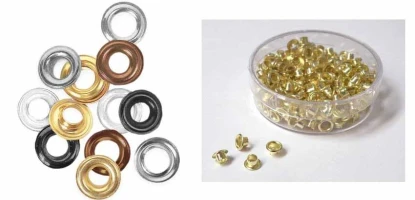
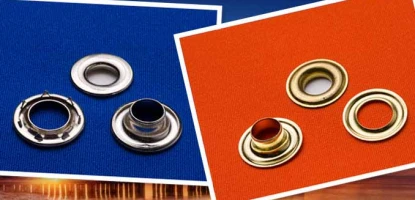
This 14 mm / 0.55 in large-diameter punching die is made for production and repair work that needs a consistent hole before installing eyelets, ropes, cords, tie-down hardware, and other compatible accessories. It can be used in tarps, awnings, tents, bags, belts, leather goods, coated fabrics, heavy textiles, and technical-material projects.
In tarp and bag construction, the hole is often the starting point for the entire fastening system. When the opening is centered, clean, and correctly sized, the next hardware step can be more controlled. That can improve the look of the finished connection and help the product feel more dependable in use.
Prepare large-diameter openings for practical fastening points
This die prepares a 14 mm / 0.55 in hole for applications that need a larger passage area. Typical examples include rope or cord passages, tarp tie-down points, awning connections, tent fastening zones, larger eyelet systems, bag hardware passages, and reinforced textile panels.
Use the hole diameter as part of a complete system. Consider the eyelet opening, barrel length, washer shape, fabric thickness, rope diameter, installation method, and expected load before beginning production.
Not a setting die
This product does not install eyelets, rivets, snaps, hooks, or other accessories. It is a punching die that prepares the opening. A separate compatible setting die is needed to attach the selected hardware after punching.
This distinction is important for buyers building a new tooling setup. Purchasing only the punching die will not complete an eyelet or hardware installation. The die, press connection, accessory, material stack, and setting tool need to match as one system.
Suitable for tarps, awnings, tents, bags, and leather work
The punching die can be considered for tarps, awnings, tent fabrics, leather goods, bags, belts, covers, technical textile panels, reinforced fabric products, and similar materials where a 14 mm opening is required.
Always test the die with the actual material before a production run. PVC-coated tarps, heavy canvas, layered fabrics, stiff leather, foam-backed panels, and reinforced seams can each respond differently to pressure and support.
Plan the opening around the real accessory requirement
Do not choose the hole size from an accessory’s outside appearance alone. Check the required opening, eyelet barrel size, washer shape, material thickness, cord or rope diameter, and the final function of the product.
A smaller-than-needed opening can make installation difficult and stress the surrounding material. An oversized opening can leave gaps around the hardware. A sample application helps confirm that the hole, hardware, and material work together as expected.
Confirm the M6 press connection before use
The product page lists an M6 connection option. Before attaching the die to a hand press, bench press, or another setup, verify the thread standard on your equipment.
M6 metric thread and 1/4"-20 UNC are not interchangeable thread systems. Do not force a die with one thread type into equipment with the other. Confirming this detail first helps protect the tooling and supports more accurate punching.
Improve finished quality with a test punch
Mark the exact punching location, keep the material flat, and support the working area well. Test one piece before punching multiple panels. Inspect the hole edge for tearing, distortion, coating separation, or uneven cutting.
This quick test can help prevent waste in valuable tarp, leather, and technical-textile materials. It also lets you confirm that the later eyelet or hardware-setting step will sit correctly in the prepared hole.
Custom punching-die and tooling requests
For larger production requirements, alternative hole diameters, special anvil arrangements, custom connection types, application-specific tooling, and project-based hardware systems can be reviewed. Share the material sample, required hole size, press thread type, hardware reference, estimated quantity, and any technical drawing or sample piece.
Frequently Asked Questions
What is this punching die used for?
It prepares a 14 mm / 0.55 in hole in compatible tarp, awning, tent, leather, bag, belt, and technical-textile materials.
Does it install eyelets or rivets?
No. It prepares the hole only. You need a separate compatible setting die to install eyelets, rivets, or other hardware.
What comes in the package?
The package includes the punching die and bottom anvil.
Can I use it on tarpaulin and coated fabric?
It can be used on compatible materials, but test punching is recommended before repeated production because thickness and coatings can affect the result.
Will it work with every 14 mm eyelet?
Not automatically. Confirm the eyelet’s required hole size, barrel length, washer design, material thickness, and matching setting die.
Can I substitute a 1/4"-20 connection for M6?
No. M6 and 1/4"-20 UNC use different thread standards and should not be forced together.

.jpg-40x40.webp "Curved Snaps Buttons")

.jpg-40x40.webp "Prong Snap Fasteners for Baby Clothes")


.jpg-40x40.webp "Snap Fasteners Half Dome type")
.jpg-40x40.webp "Magnetic Snaps Buttons")


-no5-k0010%20(3).jpg-40x40.webp "Eyetlets")


-K0014.png-40x40.webp "Steel Eyelets and Iron Metal Grommets")


.jpg-40x40.webp "Flat Brass Eyelets and Grommets")


.jpg-40x40.webp "Aluminum Eyelets and Grommets")
.jpg-40x40.webp "Galvanized Eyelets and Grommets")


.jpg-40x40.webp "Grommet Punching Dies")
.jpg-40x40.webp "Hole Cutter Tools and Punching Dies")


.jpg-40x40.webp "Pearls Types")


.jpg-40x40.webp "Water-Repellent Jacket Zippers")


.jpg-40x40.webp "Tires")

.jpg-40x40.webp "Round Braided Elastic Cord")


.webp-630x630.webp "14 mm / 0.55 in Hole Punching Die for Leather and Tarpaulin")
.webp-630x630.webp "14 mm / 0.55 in Hole Punching Die for Leather and Tarpaulin")
.webp-630x630.webp "14 mm / 0.55 in Hole Punching Die for Leather and Tarpaulin")
.webp-630x630.webp "14 mm / 0.55 in Hole Punching Die for Leather and Tarpaulin")
.webp-630x630.webp "14 mm / 0.55 in Hole Punching Die for Leather and Tarpaulin")
.webp-630x630.webp "14 mm / 0.55 in Hole Punching Die for Leather and Tarpaulin")
.webp-630x630.webp "14 mm / 0.55 in Hole Punching Die for Leather and Tarpaulin")
.webp-630x630.webp "14 mm / 0.55 in Hole Punching Die for Leather and Tarpaulin")
.webp-630x630.webp "14 mm / 0.55 in Hole Punching Die for Leather and Tarpaulin")
.webp-630x630.webp "14 mm / 0.55 in Hole Punching Die for Leather and Tarpaulin")
.webp-80x80.webp "14 mm / 0.55 in Hole Punching Die for Leather and Tarpaulin")
.webp-80x80.webp "14 mm / 0.55 in Hole Punching Die for Leather and Tarpaulin")
.webp-80x80.webp "14 mm / 0.55 in Hole Punching Die for Leather and Tarpaulin")
.webp-80x80.webp "14 mm / 0.55 in Hole Punching Die for Leather and Tarpaulin")
.webp-80x80.webp "14 mm / 0.55 in Hole Punching Die for Leather and Tarpaulin")
.webp-80x80.webp "14 mm / 0.55 in Hole Punching Die for Leather and Tarpaulin")
.webp-80x80.webp "14 mm / 0.55 in Hole Punching Die for Leather and Tarpaulin")
.webp-80x80.webp "14 mm / 0.55 in Hole Punching Die for Leather and Tarpaulin")
.webp-80x80.webp "14 mm / 0.55 in Hole Punching Die for Leather and Tarpaulin")
.webp-80x80.webp "14 mm / 0.55 in Hole Punching Die for Leather and Tarpaulin")
.jpeg-185x185.webp "Converter Eyebolt 1/4 to M6 - Converter Suitable for Turkish Machines KLP00M8M6")
.webp-185x185.webp "Hand-Hit Setting Tool for Snap Buttons Eyelets Rivets and Jeans Buttons KLP00EL01")
.webp-185x185.webp "Long-Handle Hand-Hit Setting Tool for Snap Buttons Eyelets Rivets and Jeans Buttons KLP00EL01")
.webp-185x185.webp "Manual Eyelet Setting Press for Tarpaulin, Awning and Fabric Covering M00101")
.jpeg-185x185.webp "Manual Hand Press Machine for Eyelets, Snaps, Rivets and Fabric Covered Buttons M0099")
.webp-185x185.webp "Manual Impact Press Light Type – Eyelet, Snap and Jeans Button Application Press M00100")


.jpg-415x200w.webp "Textile Accessories Material Guide: Brass, Stainless Steel, and Mild Steel")