Double-Sided Brass Eyelet Types
Double-sided eyelets are brass grommet components selected when a more balanced metal finish is needed on both the front and reverse sides of the application surface. They can be used on tarpaulins, truck covers, curtains, tents, bags, covers, textile accessories and other products where the eyelet area remains visible from both sides.
Their function is not limited to visual finish. When the inner diameter, barrel length and installation system are matched to the application material, a double-sided eyelet helps create a more organized passage point for rope, cord, elastic, tie or tensioning elements.
What Is a Double-Sided Eyelet?
A double-sided eyelet is an eyelet construction that provides a more finished metal appearance on both sides after installation. It is useful when the reverse side of a curtain, tarpaulin, tent panel, bag detail or textile component may also be seen during normal use.
The main reason to choose this construction is not simply cap appearance. It is the need for a visually balanced result on both sides, together with a suitable passage size and a setting system that fits the material thickness.
Where Are Double-Sided Eyelets Used?
| Application Area | Why Choose a Double-Sided Eyelet? | What to Check |
|---|
| Tarpaulins and truck covers | Creates a more balanced metal finish around rope, tie and tensioning-line passages. | Check material thickness, inner diameter, barrel length and tensioning element diameter. |
| Tents and outdoor textiles | Can create a more complete eyelet finish around selected elastic, cord and fixing points. | Check material structure, use conditions and compatible setting die. |
| Curtains and home textiles | Supports a neater eyelet appearance where front and reverse sides remain visible. | Check curtain layers, rod or cord diameter and required inner diameter. |
| Bags, covers and textile accessories | Can provide a finished two-sided passage for cords, straps or decorative openings. | Check product scale, load expectation, cord diameter and surface strength. |
| Technical textile applications | Can support a more organized fixing or hanging point where both sides are visible. | Check hole size, material thickness, installation quality and intended use. |
Double-Sided Eyelet Sizes
Inner diameter should be selected according to the rope, cord, elastic or tie passing through the eyelet. Outer diameter affects the visible metal area on the surface, while barrel length should be matched to the total thickness of the material layers.
| Eyelet Size Group | Inner Diameter | Outer Diameter | Barrel Length | General Selection Approach |
|---|
| Double-Sided Brass Eyelet | 4.8 mm / 3/16 in | 11 mm / 0.43 in | 3.9 mm / 0.15 in | Can be considered for smaller cord passages and compact textile, curtain or tarpaulin applications. |
| Double-Sided Brass Eyelet | 5.8 mm / 15/64 in | 13 mm / 0.51 in | 3.9 mm / 0.15 in | Can be considered for medium-size passages in tarpaulins, curtains, tents and textile accessories. |
| Double-Sided Brass Eyelet | 8 mm / 5/16 in | 15 mm / 0.59 in | 4.5 mm / 0.18 in | Can be considered for wider rope, tie or tensioning-element passages. |
Measurement note: Eyelet references can vary between manufacturers. Product page specifications for inner diameter, outer diameter, barrel length and compatible setting tools should always be used as the final reference before ordering.
Double-Sided Eyelets vs Standard Eyelets
Standard eyelet constructions can be suitable when one product face is more visible than the other. Double-sided eyelets are selected when the finished metal appearance should remain more balanced on the front and reverse sides after installation.
This makes double-sided eyelets particularly relevant for curtains, tarpaulins, tents, bags, covers and visible textile applications. The final choice should still be based on material thickness, passage size, finish expectation and compatible installation method.
Double-Sided Eyelets vs Domed Eyelets
Domed eyelets are generally selected when a raised, rounded and more pronounced cap profile is desired. Double-sided eyelets are selected mainly for their more consistent front-and-back finish rather than for a strongly raised cap shape.
To compare different eyelet constructions, review eyelets and grommets. Select the final model according to material thickness, required passage size, visible finish and setting compatibility.
Finish Selection
Double-sided brass eyelets may be available in finishes such as nickel, black nickel, gold, antique brass, gunmetal and antique silver depending on the selected product option. Nickel can suit neutral hardware styling; gold and antique brass can complement warmer decorative designs; black nickel and gunmetal can suit darker surfaces; antique silver can support a softer aged-metal appearance.
Finish selection should be evaluated together with the surface colour, other metal components and intended use conditions. Finish names describe visible appearance and should not be treated as a universal performance guarantee for every environment.
Hole Preparation and Setting Die Compatibility
Correct hole preparation is important for a clean double-sided eyelet installation. A hole that is too small can prevent proper seating. A hole that is too large can create a loose or visually uneven result around the application area.
For hole preparation, review grommet punching dies. For installation, use a compatible grommet setting die selected for the eyelet system and size.
Depending on the application and production volume, eyelets can be installed with hand-setting tools, hand presses, impact presses, electric machines or pneumatic machines. Before installation, check eyelet size, barrel length, material thickness and die compatibility as one complete system.
Double-Sided Eyelet Buying Checklist
- Will the eyelet be used on a tarpaulin, curtain, tent, bag, cover or textile accessory?
- Will both sides of the application surface remain visible during normal use?
- What is the diameter of the rope, cord, tie or elastic that will pass through the eyelet?
- Is the selected inner diameter sufficient for comfortable passage?
- Does the barrel length match the total thickness of the material layers?
- Is the visible outer diameter proportionate to the product size?
- Does the selected finish match the other hardware on the product?
- Are compatible punching and setting dies available?
Frequently Asked Questions
What is a double-sided eyelet?
A double-sided eyelet is an eyelet type that creates a more balanced finished metal appearance on the front and reverse sides of the material after installation.
Where are double-sided eyelets used?
They can be used on tarpaulins, truck covers, curtains, tents, bags, covers, textile accessories and other visible two-sided applications.
What is the difference between a double-sided eyelet and a standard eyelet?
Standard eyelets can be suitable when one side is more visible. Double-sided eyelets are selected when both sides need a more balanced finished appearance.
How do I choose between 4.8 mm, 5.8 mm and 8 mm eyelets?
Select the inner diameter according to the rope, cord, tie or elastic that will pass through the eyelet. Also check barrel length and total material thickness.
Can double-sided eyelets be used for tarpaulins?
They can be considered for tarpaulin and truck-cover applications where rope, tie or tensioning-line passages need a clean finished appearance on both sides.
Can double-sided eyelets be used for curtains?
Yes. They can be considered for curtains where both sides of the fabric remain visible. The eyelet inner diameter should suit the intended rod, cord or passage element.
Do double-sided eyelets require a setting die?
Yes. A compatible setting die and correctly matched hole preparation help create a cleaner and more balanced installation result.
E-Buttons Double-Sided Eyelet Types
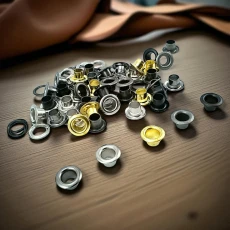
In the E-Buttons double-sided eyelet category, buyers can compare brass eyelets with 4.8 mm / 3/16 in, 5.8 mm / 15/64 in and 8 mm / 5/16 in inner diameters for tarpaulins, curtains, tents, bags, covers and textile accessories. Selecting the correct passage diameter, barrel length, finish and compatible dies helps create a cleaner and more balanced eyelet application.

.jpg-40x40.webp "Magnetic Snaps Buttons")

.jpg-40x40.webp "Prong Snap Fasteners for Baby Clothes")


.jpg-40x40.webp "Curved Snaps Buttons")


.jpg-40x40.webp "Snap Fasteners Half Dome type")
-no5-k0010%20(3).jpg-40x40.webp "Eyetlets")


-K0014.png-40x40.webp "Steel Eyelets and Iron Metal Grommets")

.jpg-40x40.webp "Flat Brass Eyelets and Grommets")

.jpg-40x40.webp "Aluminum Eyelets and Grommets")


.jpg-40x40.webp "Galvanized Eyelets and Grommets")


.jpg-40x40.webp "Hole Cutter Tools and Punching Dies")

.jpg-40x40.webp "Grommet Punching Dies")


.jpg-40x40.webp "Pearls Types")


.jpg-40x40.webp "Rivets")


.jpg-40x40.webp "Water-Repellent Jacket Zippers")


.jpg-40x40.webp "Tires")

.jpg-40x40.webp "Round Braided Elastic Cord")


.png-40x40.webp "Enameled Buttons")


.jpg-40x40.webp "Carabiner Clips, Snap Hooks and Bag Hooks")


-PhotoRoom.png-40x40.webp "Spring Rings, Key Rings and Snap Clamps")


.png-40x40.webp "Hook and Eye Closures Sew-On")


-erb0004prc-(5).jpg-230x230.webp "Double Sided Eyelet 15/64")
-ERB0005PRC.png-230x230.webp "Double Sided Eyelet 5/16")