
Bag & Leather Rivets | Metal Rivets for Bags, Leather & Belts
Bag & Leather Rivets | Metal Rivets for Bags, Leather & Belts
.webp-230x230.webp "33.5 Pin Rivet 9.5 mm (0.37")
33.5 Pin Rivet 9.5 mm (0.37") Stainless Steel Cap / Aluminum Pin – Single Sale ERPER095PThis 33.5 pin rivet features a stainless steel cap and aluminum pin structure suitable for bags, belts, wallets, leather goods, and textile accessories.Its stainless steel cap construction provides a clea..
0.02 USD
Ex Tax:0.01 USD.webp-230x230.webp "33.5 Pin Rivet 9.5 mm (0.37")
33.5 Pin Rivet 9.5 mm (0.37") Brass Cap / Aluminum Pin – Single Sale ERPER095PRThis 33.5 pin rivet features a 9.5 mm (0.37") brass cap and aluminum pin structure suitable for bags, belts, wallets, leather goods, and textile accessories.Its brass cap construction provides a premium appearance..
0.06 USD
Ex Tax:0.05 USD.webp-230x230.webp "33.5 Pin Rivet 9.5 mm (0.37")
33.5 Pin Rivet 9.5 mm (0.37") Brass Cap / Aluminum Pin Premium – Single Sale ERPER095PRKAPThis premium 33.5 pin rivet features a brass cap and aluminum pin structure suitable for bags, belts, wallets, leather goods, and textile accessories requiring elegant appearance and secure fastening.Th..
0.11 USD
Ex Tax:0.10 USD_1_11zon.webp-230x230.webp "0 Rivet 6 mm (0.24")
0 Rivet 6 mm (0.24") Cap / 6-6.5 mm (0.24"-0.26") Post Steel Rivet – 1000 Pieces R0006Not every project requires a large rivet. Many leather goods and fashion accessories need a smaller fastening solution that provides strength without overwhelming the design.The 0 Rivet series is designed s..
5.39 USD
Ex Tax:4.90 USD.webp-230x230.webp "Double Cap Long Post Rivet 9 mm (0.35")
Double Cap Long Post Rivet 9 mm (0.35") Cap / 9 mm (0.35") Post Steel – 500 Pieces SB0009-9CFTThis double cap long post rivet features a 9 mm (0.35") top cap, 9 mm (0.35") bottom cap, and a 9 mm (0.35") post length for stronger fastening performance on bags, leather goods, belts, and textile acc..
6.16 USD
Ex Tax:5.14 USD.jpeg-230x230.webp "33.5 Pin Rivet 9.5 mm (0.37")
On sale
33.5 Pin Rivet 9.5 mm (0.37") Stainless Steel Cap / Aluminum Pin – 400 Pieces Pack ERPER095PPKThis 33.5 pin rivet features a stainless steel cap and aluminum pin structure suitable for bags, belts, wallets, leather goods, and textile accessories.Its stainless steel cap construction provides ..
6.49 USD 9.46 USD
Ex Tax:5.90 USD.webp-230x230.webp "7 mm Plain Rivet Metal Rivet ( 500 Pcs/Pack ) R0009")
33 Rivet 7 mm (0.28") Cap / 7-7.5 mm (0.28"-0.30") Post Steel RivetThis compact rivet is ideal for smaller products where a large rivet would look oversized.7 mm (0.28") cap diameter
Clean and discreet appearance
Suitable for wallets and card holders
1000-piece production pack..
6.49 USD
Ex Tax:5.90 USD.png-230x230.webp "54 Single Cap Rivet 12 mm (0.47")
54 Single Cap Rivet 12 mm (0.47") / 7.5 mm (0.29") Post Steel Rivet – 500 Pieces R0004This single cap rivet model features a 12 mm (0.47") cap diameter suitable for bags, belts, wallets, leather goods, and textile accessories requiring decorative metal appearance.Its larger cap size creates ..
6.73 USD
Ex Tax:6.12 USD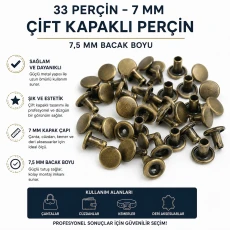
33 Double Cap Rivet 7 mm (0.28") Front Cap / 7 mm (0.28") Back Cap / 7.5 mm (0.30") Post Steel Rivet – 500 Sets R00033CFTCustomers often judge product quality by the details. In wallets, card holders, and handcrafted leather goods, visible hardware can significantly influence how premium the fin..
7.59 USD
Ex Tax:6.90 USD.jpg-230x230.webp "33.5 Nail Rivet 9 mm (0.35")
33.5 Nail Rivet 9 mm (0.35") Steel Cap Aluminum Nail – 1000 Pieces is a rivet listed by E-Buttons under Aluminum Nail Rivets. For correct selection, treat the nominal size as a starting point and evaluate it with the real material, mating component, and installation method used in production.Selecti..
7.88 USD
Ex Tax:7.16 USD.webp-230x230.webp "54 Single Cap Rivet 12 mm (0.47")
54 Single Cap Rivet 12 mm (0.47") / 11 mm (0.43") Long Post Steel Rivet – 500 Pieces R00054-11This long post rivet model is suitable for bags, belts, leather goods, and thick textile applications requiring stronger installation performance.Its 11 mm (0.43") long post structure provides more ..
8.07 USD
Ex Tax:7.34 USD.png-230x230.webp "33.5 Single Cap Rivet 9.5 mm (0.37")
33.5 Single Cap Rivet 9.5 mm (0.37") / 7.5 mm (0.29") Post Steel Rivet – 1000 Pieces R000595This 33.5 single cap rivet features a 9.5 mm (0.37") cap diameter and a 7.5 mm (0.29") post length suitable for bags, leather goods, belts, wallets, and textile accessories.Its steel cap structure and..
8.29 USD
Ex Tax:7.54 USD.webp-230x230.webp "54 Double Cap Rivet 12 mm (0.47")
54 Double Cap Rivet 12 mm (0.47") Front Cap / 12 mm (0.47") Back Cap / 7.5 mm (0.30") Post Steel Rivet – 500 SetsThis double cap rivet is designed for products where both sides remain visible. Instead of leaving an exposed back side, matching decorative caps create a finished professional appear..
8.69 USD
Ex Tax:7.90 USD.webp-230x230.webp "0 Double Cap Rivet 6 mm (0.24")
The 0 Double Cap Rivet is a versatile fastening solution, featuring a 6 mm (0.24") front cap and a 6 mm (0.24") back cap, designed specifically for applications requiring a subtle yet secure hold. With a post size of 6-6.5 mm (0.24"-0.26"), this steel rivet is perfect for crafting thin leather produ..
9.79 USD
Ex Tax:8.90 USD.webp-230x230.webp "54 Double Cap Rivet 12 mm (0.47")
54 Double Cap Rivet 12 mm (0.47") Front Cap / 12 mm (0.47") Back Cap / 11 mm (0.43") Long Post Steel Rivet – 500 Sets R00054CFT-11Customers notice details. A visible fastening component can either improve the appearance of a product or reduce its perceived quality. This is why double cap rivets ..
9.79 USD
Ex Tax:8.90 USD.webp-230x230.webp "61 Double Cap Rivet 15 mm (0.59")
61 Double Cap Rivet 15 mm (0.59") Front Cap / 12 mm (0.47") Back Cap / 11 mm (0.43") Long Post Steel Rivet – 500 Sets R00061CFT-11When customers inspect a premium product, they notice every detail. A visible rivet should not look unfinished on the back side. That is why double cap rivets are wid..
9.79 USD
Ex Tax:8.90 USD