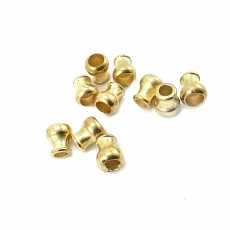
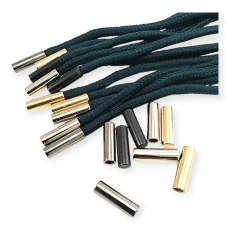
Cord Ends and Drawstring Tips is an E-Buttons category guide built around the 12 product-language records linked to this category in the working table. The purpose is not simply to list items, but to help buyers compare product family, critical dimension, verified material or finish wording, installation method, and sample validation before selecting an individual product. Products appearing in the same category are not automatically direct substitutes.
Selection guide for Cord Ends and Drawstring Tips
Verified size wording across product names includes 4 mm, 3.5 mm, 14 mm, 3.4 mm, 20 mm, 16 mm, 14mm, 9mm, 5.8 mm, 7 mm, 30 mm, 15 mm, 14.5 mm, 4.5 mm. The meaning of each value depends on product family, so interpret it in the context of the individual live product page.
Verified material or finish wording includes Metal, Brass, Stainless steel. Do not infer an unlisted alloy or performance characteristic from appearance.
| Check | What to verify | Why it matters |
|---|
| Product family | Actual function and connection system | Similar appearance can hide a different system. |
| Dimension | Measurement point and nominal value | The same number can describe different geometry. |
| Material/finish | Only verified wording | Appearance is not proof of alloy. |
| Installation | Tool/die and process | Incompatible tooling can deform the part. |
| Sample | Actual production material | Final verification before bulk production. |
Live product examples
Search intent and product family
Buyers entering the Cord Ends and Drawstring Tips category may use one broad search phrase for several different hardware constructions. The first task is therefore to confirm that the selected item belongs to the required product family and performs the intended job in the finished product. Items such as Bell Model 4 mm Cord Entry Metal Cord End - Pear Model Medium Size and Metal Cord End Bell Model - Pear Model 3.5 mm Cord Entry Small Size show real choices within the category, but similar naming does not prove that their connection systems are interchangeable. Defining the function, installation method, and critical dimension before comparing prices helps purchasing teams avoid selecting a visually similar but technically different part.
Read the dimension at the correct point
Size wording visible in this category may include 4 mm, 3.5 mm, 14 mm, 3.4 mm, 20 mm, 16 mm. The meaning of a number changes with product family: it may describe strap opening, inner diameter, outer diameter, button diameter, barrel height, overall length, or zipper length. Two items carrying the same nominal number can therefore be measured at different points. Treat category filters as a way to narrow candidates, not as final proof of compatibility. Confirm the dimension on the live product page and validate the selected item on a real production sample before placing a high-volume order.
Separate material from finish
Verified material or surface wording across product titles may include Metal, Brass, Stainless steel. Material, coating color, and surface appearance are different attributes. A nickel, antique, black, or gold-tone description can identify appearance without identifying the underlying alloy. If brass, zinc alloy, plastic, stainless steel, or another material is not explicitly stated, do not infer it from a photograph. When a project specification makes material critical, obtain technical confirmation before ordering rather than turning an unverified visual assumption into a permanent purchasing rule.
Validate on the real production sample
The most reliable way to select from Cord Ends and Drawstring Tips is to test the candidate on the actual fabric, strap, cord, leather, or mating component used in production. Layer thickness, elasticity, weave, cord construction, and connection geometry can change the result even when the catalog size appears correct. A product such as Cylinder Model Metal Cord End 3.5 mm Cord Entry Small Size may look suitable on paper but should still be evaluated in the real assembly. The sample should confirm fit, movement, appearance, and whether the surrounding material is distorted or stressed during normal use.
Installation method and tooling
When installation tooling is required, verify the hardware and the tool as separate decisions. Punching and setting are different operations, so the terms Punching Die and Setting Die should not be mixed. A press or setting tool must match the actual product geometry rather than merely sharing a nominal diameter. Similar-looking parts can use different underside shapes, barrel lengths, or cap profiles. Testing the tool setup before bulk production helps prevent surface marks, loose assembly, cracking, or deformation and creates a repeatable reference for production staff.
Color and finish coordination
When several pieces of hardware appear in one collection, approve color by comparing physical samples side by side. Screen brightness, photography, and normal production-batch variation can change how nickel, black, antique, or gold-tone finishes appear online. Functional compatibility should be confirmed first; finish coordination should then be approved under consistent lighting. Do not assume that two separate product families carrying the same color name will be visually identical. Recording the approved physical sample in the production file gives repeat orders a more reliable reference than an old screen image.
Wholesale purchasing and repeat orders
For high-volume orders, record model code, critical dimension, and approved finish together instead of relying on a short product name. Using the same identifiers on purchasing documents, warehouse labels, and production sheets reduces the risk of mixing visually similar parts. For an item such as Bell Model 4 mm Cord Entry Metal Cord End - Pear Model Medium Size, the model reference becomes especially useful when several sizes or finishes are stored together. On repeat orders, compare the approved reference with the live E-Buttons page so current stock and commercial terms are not confused with the technical attributes that define the correct item.
Incoming quality control
Incoming inspection should include more than piece count. Random samples can be checked for visible surface condition, burrs or deformation, dimensional consistency, movement of functional parts, and fit with the mating component when relevant. Acceptance criteria should come from the buyer's quality plan; if the product page does not publish a tolerance, load rating, or durability value, category copy should not invent one. Early sampling is particularly valuable for large production runs because a small dimensional or installation issue can otherwise be repeated across thousands of finished items.
Warehouse separation and traceability
Storing similar parts in the same unlabelled container increases picking errors. Products in Cord Ends and Drawstring Tips should be separated by model, critical size, and finish where relevant, with identifiers visible on the bin or package. Appearance alone is not a reliable warehouse key, especially when the same nominal dimension occurs across different systems. A simple lot label, compartment box, or production-order reference can improve traceability. When material leaves the warehouse, checking it against the identifiers used during sample approval helps detect a wrong component before it reaches the production line.
Reduce the cost of a wrong selection
The lowest unit price does not always produce the lowest manufacturing cost. An incorrect size, incompatible die, rework, scrap, or line stoppage can cost more than a small price difference between candidate parts. Purchasing decisions in Cord Ends and Drawstring Tips should therefore consider sample time, installation method, mating-part fit, and ease of quality control along with price. A short pilot run or physical sample is usually a lower-risk step than placing a large order before the technical requirement has been confirmed under real manufacturing conditions.
Replacing an existing model
When replacing an existing item, compare more than the nominal size. Outside geometry, connection points, body or wire section, installation orientation, mating system, and surface profile should all be reviewed again. Bell Model 4 mm Cord Entry Metal Cord End - Pear Model Medium Size and Metal Cord End Bell Model - Pear Model 3.5 mm Cord Entry Small Size may appear in the same category without being direct substitutes. A replacement should receive a fresh sample approval on the finished product so function, appearance, and production practicality are evaluated together. Technical substitution should be based on application results rather than visual similarity or a shared category label.
Live page and changing commercial data
Price, stock, minimum order, color options, and promotions can change over time. Category copy should not turn these changing commercial details into permanent technical claims. At the time of purchase, recheck the relevant live E-Buttons product page for current options and availability. More stable identifiers such as model, product type, critical dimension, and verified material wording should drive technical selection, while current commercial conditions should be confirmed when the order is actually placed. Keeping those two information types separate improves both content accuracy and repeat-purchase control.
Purpose of internal product links
Internal links in a category guide should help buyers compare real products rather than simply increase link count. Linked items should demonstrate meaningful differences in size, construction, or intended installation. Live examples such as Bell Model 4 mm Cord Entry Metal Cord End - Pear Model Medium Size, Metal Cord End Bell Model - Pear Model 3.5 mm Cord Entry Small Size, and Cylinder Model Metal Cord End 3.5 mm Cord Entry Small Size can make the category structure concrete, but inactive pages, wrong-language pages, or links to another store should not be inserted. Useful internal linking moves the buyer from broad category understanding to an individual product decision and also gives search systems clearer signals about the relationship between category and product pages.
Production-file documentation
Store more than a product photograph in the production file. Record the approved model code, critical dimension, finish, tool or installation method, and sample date when those details matter. This documentation becomes valuable when a different employee repeats the project or when the same collection returns in a later season. Categories such as Cord Ends and Drawstring Tips can contain many visually similar options, so written identifiers keep the decision from depending on memory. On a new order, compare the previous approval record with the current live product information before releasing material to production.
Use filters without treating them as drawings
Filters are useful for narrowing candidates, but they are not substitutes for technical drawings or product-specific measurements. Selecting a value such as 4 mm, 3.5 mm, 14 mm, 3.4 mm, 20 mm, 16 mm does not guarantee that every result has the same outer dimensions, material, or installation system. Use the filter to create a shortlist, then review each product page for the meaning of the dimension and any verified compatibility notes. When the critical measurement remains unclear, requesting a sample or technical confirmation is safer than assuming that a filter label is sufficient for a large order.
Match use case to construction
Being listed in one category does not prove that every item will behave identically in every application. Fabric stretch, thickness, surface texture, movement during use, and the visual role of the hardware should be considered together. Do not add unsupported claims about waterproofing, heavy-duty performance, corrosion resistance, safety, or certification unless the live product information verifies them. When a project has a specific engineering requirement, confirm that requirement separately instead of assuming that category membership or appearance proves suitability.
First-piece approval on the production line
A first-piece approval confirms that the correct accessory and the correct process have reached the production line together. Press adjustment, stitch position, strap direction, layer stack, or mating-part orientation can change the result even when the accessory itself is correct. Inspect symmetry, surface marking, play, movement, and appearance on the first assembled piece. Keeping an approved first piece as a reference makes later comparisons easier across shifts and helps separate installation problems from issues that genuinely originate in the hardware.
Use precise technical language in purchasing
A purchase request should identify the real product model and critical dimension rather than only the category name. Terms such as ring, hook, slider, buckle, Punching Die, and Setting Die should be used according to the actual product family. Imprecise wording can cause the buyer, supplier, and production team to imagine different parts. The verified E-Buttons product name can serve as the purchasing reference, while any additional technical requirement should be written with its measurement point and application context so there is less room for interpretation.
Collection balance and visual approval
A technically compatible accessory can still be visually wrong for the finished design. When comparing products in Cord Ends and Drawstring Tips, review the visual weight of the part on the actual fabric or leather, its proportion relative to nearby hardware, and whether it remains visible during use. Different outside geometries within the same size group can change the design impression. Treat technical fit and aesthetic approval as separate checks so the production team can distinguish a functional requirement from a styling preference when alternatives are considered.
Revalidate repeat purchases
An item purchased before should still be revalidated when ordered again after a long interval. Website structure, available options, and commercial terms can change. Before repeating the purchase, compare the model code and critical dimension with the current E-Buttons page and, when possible, with the approved physical sample already held by the business. Even if the category location has changed, the model and verified technical identifiers remain stronger references for finding the correct part. This small check reduces confusion on seasonal or infrequent repeat orders.
Comparing individual products
Bell Model 4 mm Cord Entry Metal Cord End - Pear Model Medium Size
Bell Model 4 mm Cord Entry Metal Cord End - Pear Model Medium Size is one real option in this category. When comparing it with another item, confirm what the wording 4 mm measures on the live page and use only verified material or finish information such as Metal. A similar nominal size elsewhere in the category does not prove identical outside geometry, connection points, or installation method. Before releasing a bulk order, test the item with the actual fabric, strap, cord, or mating component and record the approved selection with its model reference in the production file. Recheck current price, stock, and available options on the live page at the time of ordering.
Metal Cord End Bell Model - Pear Model 3.5 mm Cord Entry Small Size
Metal Cord End Bell Model - Pear Model 3.5 mm Cord Entry Small Size is one real option in this category. When comparing it with another item, confirm what the wording 3.5 mm measures on the live page and use only verified material or finish information such as Metal. A similar nominal size elsewhere in the category does not prove identical outside geometry, connection points, or installation method. Before releasing a bulk order, test the item with the actual fabric, strap, cord, or mating component and record the approved selection with its model reference in the production file. Recheck current price, stock, and available options on the live page at the time of ordering.
Cylinder Model Metal Cord End 3.5 mm Cord Entry Small Size
Cylinder Model Metal Cord End 3.5 mm Cord Entry Small Size is one real option in this category. When comparing it with another item, confirm what the wording 3.5 mm measures on the live page and use only verified material or finish information such as Metal. A similar nominal size elsewhere in the category does not prove identical outside geometry, connection points, or installation method. Before releasing a bulk order, test the item with the actual fabric, strap, cord, or mating component and record the approved selection with its model reference in the production file. Recheck current price, stock, and available options on the live page at the time of ordering.
Cord End Conical Circular Patterned Length 14 mm inlet 3.4 mm - 0,14"
Cord End Conical Circular Patterned Length 14 mm inlet 3.4 mm - 0,14" is one real option in this category. When comparing it with another item, confirm what the wording 14 mm, 3.4 mm measures on the live page and use only verified material or finish information such as verified material or finish wording. A similar nominal size elsewhere in the category does not prove identical outside geometry, connection points, or installation method. Before releasing a bulk order, test the item with the actual fabric, strap, cord, or mating component and record the approved selection with its model reference in the production file. Recheck current price, stock, and available options on the live page at the time of ordering.
Cord End Clamp 20 mm x 16 mm Brass
Cord End Clamp 20 mm x 16 mm Brass is one real option in this category. When comparing it with another item, confirm what the wording 20 mm, 16 mm measures on the live page and use only verified material or finish information such as Brass. A similar nominal size elsewhere in the category does not prove identical outside geometry, connection points, or installation method. Before releasing a bulk order, test the item with the actual fabric, strap, cord, or mating component and record the approved selection with its model reference in the production file. Recheck current price, stock, and available options on the live page at the time of ordering.
14mm x 9mm Cord End Clamping Piece Metal
14mm x 9mm Cord End Clamping Piece Metal is one real option in this category. When comparing it with another item, confirm what the wording 14mm, 9mm measures on the live page and use only verified material or finish information such as Metal. A similar nominal size elsewhere in the category does not prove identical outside geometry, connection points, or installation method. Before releasing a bulk order, test the item with the actual fabric, strap, cord, or mating component and record the approved selection with its model reference in the production file. Recheck current price, stock, and available options on the live page at the time of ordering.
Inlet 5.8 mm - 0,22" Cord End for Clothing Patterned Metal Bead Shape length 7 mm
Inlet 5.8 mm - 0,22" Cord End for Clothing Patterned Metal Bead Shape length 7 mm is one real option in this category. When comparing it with another item, confirm what the wording 5.8 mm, 7 mm measures on the live page and use only verified material or finish information such as Metal. A similar nominal size elsewhere in the category does not prove identical outside geometry, connection points, or installation method. Before releasing a bulk order, test the item with the actual fabric, strap, cord, or mating component and record the approved selection with its model reference in the production file. Recheck current price, stock, and available options on the live page at the time of ordering.
Belt Clamp 30 mm x 15 mm Brass Stainless
Belt Clamp 30 mm x 15 mm Brass Stainless is one real option in this category. When comparing it with another item, confirm what the wording 30 mm, 15 mm measures on the live page and use only verified material or finish information such as Brass, Stainless steel. A similar nominal size elsewhere in the category does not prove identical outside geometry, connection points, or installation method. Before releasing a bulk order, test the item with the actual fabric, strap, cord, or mating component and record the approved selection with its model reference in the production file. Recheck current price, stock, and available options on the live page at the time of ordering.
Cord End Screw Threaded Two Piece Length 14.5 mm Inlet 3.5 mm Cylinder Shape
Cord End Screw Threaded Two Piece Length 14.5 mm Inlet 3.5 mm Cylinder Shape is one real option in this category. When comparing it with another item, confirm what the wording 14.5 mm, 3.5 mm measures on the live page and use only verified material or finish information such as verified material or finish wording. A similar nominal size elsewhere in the category does not prove identical outside geometry, connection points, or installation method. Before releasing a bulk order, test the item with the actual fabric, strap, cord, or mating component and record the approved selection with its model reference in the production file. Recheck current price, stock, and available options on the live page at the time of ordering.
Metal Cord End Cylinder Model 4 mm Cord Input
Metal Cord End Cylinder Model 4 mm Cord Input is one real option in this category. When comparing it with another item, confirm what the wording 4 mm measures on the live page and use only verified material or finish information such as Metal. A similar nominal size elsewhere in the category does not prove identical outside geometry, connection points, or installation method. Before releasing a bulk order, test the item with the actual fabric, strap, cord, or mating component and record the approved selection with its model reference in the production file. Recheck current price, stock, and available options on the live page at the time of ordering.
Metal Cord End Pear Model - Bell Model 4.5 mm Cord Input
Metal Cord End Pear Model - Bell Model 4.5 mm Cord Input is one real option in this category. When comparing it with another item, confirm what the wording 4.5 mm measures on the live page and use only verified material or finish information such as Metal. A similar nominal size elsewhere in the category does not prove identical outside geometry, connection points, or installation method. Before releasing a bulk order, test the item with the actual fabric, strap, cord, or mating component and record the approved selection with its model reference in the production file. Recheck current price, stock, and available options on the live page at the time of ordering.
3.5 mm Cord Entry Metal Cord End Elegant - Bell Model - Pear Model
3.5 mm Cord Entry Metal Cord End Elegant - Bell Model - Pear Model is one real option in this category. When comparing it with another item, confirm what the wording 3.5 mm measures on the live page and use only verified material or finish information such as Metal. A similar nominal size elsewhere in the category does not prove identical outside geometry, connection points, or installation method. Before releasing a bulk order, test the item with the actual fabric, strap, cord, or mating component and record the approved selection with its model reference in the production file. Recheck current price, stock, and available options on the live page at the time of ordering.
Frequently Asked Questions
Which size should I compare within this category?
The critical dimension depends on the product family. Inner diameter, outer diameter, strap opening, overall length, and zipper length are different measurements; review the product name together with the live technical information.
Are two products with the same nominal size interchangeable?
Not automatically. Outside geometry, material, connection method, or installation system may differ. Validate any substitution with a sample application.
How should I choose an installation die or tool?
Verify the die against the actual product model and system. A Punching Die prepares the hole, while a Setting Die forms and secures the hardware; do not mix those functions.
How should color and finish be approved?
When possible, compare physical samples under the same light rather than relying only on screen images, especially when several metal components must match within one collection.
Are category price and stock details permanent?
No. Commercial details can change; check the live E-Buttons product page when placing the order.
What should I do before a high-volume order?
Complete a sample application on the real fabric, strap, cord, or mating component and approve the model, size, color, and assembly result together.
Can I infer a technical property that is not shown on the product page?
No. Unsupported strength, certification, material, or compatibility claims should not be assumed. Obtain technical confirmation when a requirement is critical.
Why are internal product links limited?
Only live products that genuinely help comparison are linked. The goal is to support a buying decision, not to increase link count.

.jpg-230x230.webp "Metal Cord End Clamp 9,5mm x 7mm H00002")
.jpg-230x230.webp "Spring Tie End 5 mm - 0,20")
.jpg-230x230.webp "Metal Cord End Clamp 10mm x 9mm H00001")
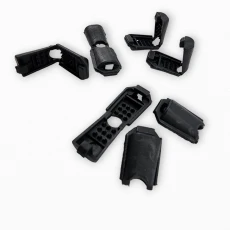
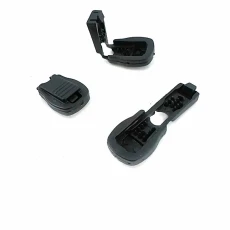
.jpg-230x230.webp "Plastic Cap 5 mm Cord Entry Cord End Bell Model - Pear Model H002810")
.jpg-230x230.webp "Plastic Cap Cord End Bell Model 5.5 mm Cord Entry Pear Model H002522")
.jpeg-230x230.webp "Plastic Cord End Small Size Interlocking - Compression H003101")
.jpeg-230x230.webp "Plastic Cord Ends Interlocking - Compression Big Size H003022")
.jpeg-230x230.webp "Plastic Cord End Interlocking - Compression Aesthetic Model H009006")
.jpg-230x230.webp "Bell Model 4 mm Cord Entry Metal Cord End - Pear Model Medium Size E 92")
.jpg-230x230.webp "Cylinder Model Metal Cord End 3.5 mm Cord Entry Small Size E 2276")
.jpg-230x230.webp "Metal Cord End 4 mm Cord Entry Small Cylinder Model - Patterned and Aesthetic Design E 2253")