Rivets and Studs for Bags, Leather Goods, Belts and Textile Accessories
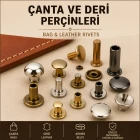
Rivets and studs are permanent fasteners used to connect two or more layers of leather, faux leather, fabric, canvas, webbing, reinforcement material and other accessory components. They are commonly used on bag handles, belt ends, wallets, card holders, shoe details, straps, pouches, cases and textile accessory products.
A rivet can be selected for functional fastening, decorative metal detail or both. The right choice depends on the expected load, the visible cap style, the thickness of every joined layer, the post length and the setting-die compatibility.
Single Cap, Double Cap, Pin and Long-Post Rivets
| Rivet Type | Construction | When to Choose It | Typical Uses |
|---|
| Single Cap Rivets | A decorative cap is visible on one side, with a simpler fastening finish on the reverse side. | Choose when one visible decorative cap is enough and the reverse side is hidden or less important visually. | Bags, belts, wallets, leather goods, shoes and textile accessories. |
| Double Cap Rivets | Finished cap surfaces are visible on both sides of the material. | Choose when both sides of the product remain visible and need a balanced metal finish. | Bag handles, wallets, card holders, belts, keyrings and double-sided leather products. |
| Pin Rivets | A cap and pin or nail component form the fastening system. | Choose when the design uses a cap-and-pin rivet structure and the selected pin length suits the material stack. | Bags, belts, leather accessories, canvas products and textile components. |
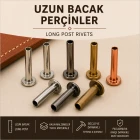
| Long Post Rivets | A longer post or pin structure is used for thicker material combinations. | Choose for thick leather, layered canvas, reinforced bag handles, belts and padded strap constructions. | Heavy leather goods, belts, bags, pouches, cases and reinforced textile accessories. |
Rivet Size Guide: Cap Diameter and Post Length
Two measurements matter in rivet selection: cap diameter and post length. Cap diameter determines the visible metal area and visual balance on the finished product. Post length must suit the combined thickness of every material layer being joined.
When calculating material thickness, include not only the main leather or fabric but also lining, interfacing, webbing, reinforcement leather, foam, cardboard support and additional layers. A post that is too short may not close securely. A post that is too long can create a loose, uneven or poorly seated fastening.
Rivet System and Size Reference
| System / Type | Cap Diameter | Typical Post Length | Common Material Options | Recommended Applications |
|---|
| 00 Rivet | 5 mm / 0.20 in | 5.5 mm / 0.22 in | Brass | Small wallets, card holders, fine leather accessories, keyrings and compact textile details. |
| 0 Rivet | 6 mm / 0.24 in | 6–6.5 mm / 0.24–0.26 in | Steel or brass | Thin leather, small bag details, belt ends and compact accessory applications. |
| 33 Rivet | 7 mm / 0.28 in | 7–7.5 mm / 0.28–0.30 in | Steel or brass | Wallets, bags, belts, shoes, leather accessories and standard textile applications. |
| 33.5 Rivet | 9.5 mm / 0.37 in | 7.5 mm / 0.30 in | Steel, brass or aluminum-pin combinations | Bags, belts, wallets, leather goods and products requiring a more visible cap. |
| 123 Rivet | 11 mm / 0.43 in | Long-post construction; check the individual product for the exact post length. | Steel | Thick leather, reinforced bag parts, layered canvas and special accessory production. |
| 54 / 75 Rivet | 12 mm / 0.47 in | 7 mm, 7.5 mm or 11 mm / 0.28, 0.30 or 0.43 in | Steel or brass | Bags, belts, medium-to-thick leather, textile accessories and workshop production. |
| Intermediate Sizes | Approximately 12.5 mm / 0.49 in and product-specific diameters | Varies by product. | Steel or brass | Special bag, belt, leather and textile accessory applications outside standard rivet systems. |
| 61 Rivet | 15 mm / 0.59 in front cap; double-cap versions may use a 12 mm / 0.47 in back cap. | Steel models: 7 mm or 11 mm / 0.28 or 0.43 in. Brass models: 7 mm / 0.28 in. | Steel or brass | Large bags, thick leather goods, belts, visible decorative connections and high-impact accessory areas. |
Important: This table is a selection guide. The same rivet system can include single-cap, double-cap, pin and long-post versions. The individual product page remains the final reference for cap diameter, back-cap structure, post length, cap material, pin material and compatible setting tool.
Single Cap vs. Double Cap Rivets
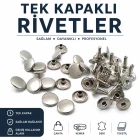
Single cap rivets provide a visible decorative cap on one side. They are useful when the reverse side is hidden by lining, rests against another component or does not need a finished metal appearance.
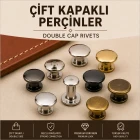
Double cap rivets create a finished cap appearance on both the front and reverse sides. They are particularly suitable for bag handles, wallets, belts, card holders and leather products where both faces remain visible.
Pin Rivets: Cap Material and Pin Material
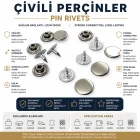
In pin rivet systems, the visible cap and the pin or nail do not always use the same material. A rivet may combine a brass cap with an aluminum pin, or use a stainless steel cap with an aluminum pin, depending on the product system.
For this reason, do not choose a pin rivet only by finish colour or cap appearance. Confirm the cap material, pin material, pin length, material thickness and compatible setting die on the relevant product page. For aluminum nail systems, see aluminum nail rivets.
When Should You Choose a Long-Post Rivet?
Long-post rivets are selected when standard posts cannot pass through the full thickness of the material stack. They are useful for thick leather, lined bag handles, reinforced belts, layered canvas, padded straps, cases and other multi-layer constructions.
Longer is not always better. A post should pass through all material layers and leave the correct amount of length for closing. Excess post length can create an uneven fastening or a gap below the cap. Testing the selected rivet on the actual material stack before production is the most reliable approach.
Rivet Materials: Steel, Brass, Stainless Steel, Aluminum Pin, Zinc Alloy and Plastic
| Material | What It Offers | When to Choose It | Related Category |
|---|
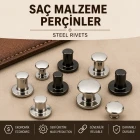
| Steel | Practical cost structure, broad use and multiple plated finish options. | Standard bags, belts, shoes, textile accessories and general leather goods production. | Steel Rivets |
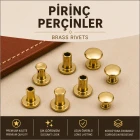
| Brass | Refined metal appearance, finish quality and a more premium accessory effect. | Leather bags, belts, wallets, footwear and products with visible metal details. | Brass Rivets |
| Stainless Steel | Suitable for applications where moisture, outdoor exposure and oxidation risk require closer consideration. | Outdoor bags, technical textile, cases, covers and durability-focused accessories. | Stainless Steel Rivets |
| Aluminum Pin | A lightweight pin component used in selected pin-rivet systems. | Use when the product specification identifies an aluminum nail or pin structure. | Aluminum Nail Rivets |
| Zinc Alloy / Zamak | Cast forms, logos, embossed patterns and decorative accessory designs. | Use when the fastening point should also serve as a visible branding or design feature. | Decorative Zinc Alloy Rivets |
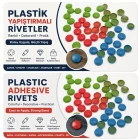
| Decorative Plastic | Lightweight construction, colour coordination and non-metallic decorative finishes. | Use for fashion accessories requiring a coloured, lightweight or plastic cap appearance. | Decorative Plastic Rivets |
Rivet Setting Dies and Installation Tools
The correct setting die should be selected according to the exact rivet construction, not only the cap diameter. Single-cap, double-cap, pin-rivet and long-post structures can have different cap forms, back-cap structures and closing requirements.
Browse rivet assembly tools for setting dies designed for different cap sizes and rivet structures. The setting tool, press connection, post length and material thickness should all be checked before installation.
Compatible rivet dies can be used with hand-hit tools, hand presses, impact presses, electric machines and pneumatic machines when the die connection, press compatibility and rivet system are suitable for the application.
Choosing Rivets for Bags, Leather, Belts and Textile Products
Bag and leather rivets are used for handle connections, belt ends, pocket corners, wallet flaps, strap joins, keyring attachments and decorative reinforcement points. In high-stress areas such as bag handles and belts, expected pull load, material thickness and reinforcement layers should be considered together.
For card holders, thin wallets and compact leather accessories, smaller cap systems such as 5 mm / 0.20 in, 6 mm / 0.24 in or 7 mm / 0.28 in can create a more balanced result. For bags, belts and visible connection points, 9.5 mm / 0.37 in, 12 mm / 0.47 in or 15 mm / 0.59 in cap systems can provide a stronger decorative metal effect. Choose a suitable long-post model for thick leather, reinforced handles and layered construction.
Frequently Asked Questions
What is the difference between a rivet and a leather rivet?
Leather rivet is an application-based term for a rivet used on leather goods. The correct product is selected according to cap size, post length, material thickness, cap construction, material composition and compatible setting tool.
What do rivet systems such as 0, 33, 33.5, 54 and 61 mean?
These system names identify rivet size groups and cap diameter ranges. In general, 0 rivets are around 6 mm / 0.24 in, 33 rivets around 7 mm / 0.28 in, 33.5 rivets around 9.5 mm / 0.37 in, 54 rivets around 12 mm / 0.47 in and 61 rivets around 15 mm / 0.59 in front-cap size.
How do I choose the correct rivet post length?
Choose the post length according to the combined thickness of all joined layers, including leather, lining, webbing, canvas, interfacing and reinforcement materials. A short post may not close securely; an overly long post may create an uneven result.
Should I choose a single-cap or double-cap rivet?
Choose a single-cap rivet when one visible decorative cap is sufficient. Choose a double-cap rivet when both sides of the product remain visible and require a clean finished appearance.
When should I use a long-post rivet?
Use a long-post rivet for thick leather, reinforced bag handles, layered canvas, belts, padded straps, cases and other multi-layer structures where a standard post is too short.
Can a pin rivet have a brass cap and an aluminum pin?
Yes. Pin-rivet systems can combine different component materials. Confirm the cap material, pin material, pin length and compatible setting die on the individual product page.
Which material is suitable for leather bags?
Steel rivets are widely used for standard bag production. Brass can be selected for a more premium finish. Stainless steel can be evaluated where moisture, outdoor exposure or higher corrosion resistance are important.
Do I need a rivet setting die?
Yes. A setting die matched to the rivet system helps the cap close evenly, reduces the risk of deformation and supports a more secure fastening result.
Can rivets be used on textile and canvas products?
Yes. Rivets can be used on canvas, webbing, layered textile accessories and selected garment components when the material structure, post length, reinforcement need and setting method are suitable.
Are rivets opening and closing fasteners?
No. Rivets are permanent fastening components. For products that require repeated opening and closing, choose a snap fastener, magnetic snap, buckle, hook-and-bar closure or another suitable fastening system.

.jpg-40x40.webp "Magnetic Snaps Buttons")

.jpg-40x40.webp "Prong Snap Fasteners for Baby Clothes")


.jpg-40x40.webp "Curved Snaps Buttons")


.jpg-40x40.webp "Snap Fasteners Half Dome type")
-no5-k0010%20(3).jpg-40x40.webp "Eyetlets")


-K0014.png-40x40.webp "Steel Eyelets and Iron Metal Grommets")

.jpg-40x40.webp "Flat Brass Eyelets and Grommets")

.jpg-40x40.webp "Aluminum Eyelets and Grommets")


.jpg-40x40.webp "Galvanized Eyelets and Grommets")


.jpg-40x40.webp "Grommet Punching Dies")
.jpg-40x40.webp "Hole Cutter Tools and Punching Dies")


.jpg-40x40.webp "Pearls Types")


.jpg-40x40.webp "Rivets")


.jpg-40x40.webp "Water-Repellent Jacket Zippers")


.jpg-40x40.webp "Tires")

.jpg-40x40.webp "Round Braided Elastic Cord")


.png-40x40.webp "Enameled Buttons")


.png-40x40.webp "Two Hole Sewing Buttons")


.jpg-40x40.webp "Carabiner Clips, Snap Hooks and Bag Hooks")


-PhotoRoom.png-40x40.webp "Spring Rings, Key Rings and Snap Clamps")


.png-40x40.webp "Hook and Eye Closures Sew-On")





.webp-230x230.webp "33.5 Pin Rivet 9.5 mm (0.37")
.webp-230x230.webp "33.5 Pin Rivet 9.5 mm (0.37")
-E-2236.jpg-230x230.webp "11,5 mm Zamak Rivet Housefly Logo E 2236")
.webp-230x230.webp "33.5 Pin Rivet 9.5 mm (0.37")
-17,5-mm-Boga-Logolu-E-2246.jpg-230x230.webp "Rivet Bull Logo 17,5 mm Zamak E 2246")
_1_11zon.webp-230x230.webp "0 Rivet 6 mm (0.24")
.webp-230x230.webp "11 mm (0.43")
.webp-230x230.webp "Double Cap Long Post Rivet 9 mm (0.35")
.jpeg-230x230.webp "33.5 Pin Rivet 9.5 mm (0.37")
.webp-230x230.webp "7 mm Plain Rivet Metal Rivet ( 500 Pcs/Pack ) R0009")
.png-230x230.webp "54 Single Cap Rivet 12 mm (0.47")
.jpg-230x230.webp "33.5 Nail Rivet 9 mm (0.35")
.webp-230x230.webp "9 mm (0.35")
.webp-230x230.webp "54 Single Cap Rivet 12 mm (0.47")