How Do Cord Ends and Cord Locks Work?
A cord end is installed at the terminal section of a lace, drawstring, rope or compatible elastic. Depending on its construction, it may cover the cut edge, contain a knot, reduce fraying or add a visible finishing detail.
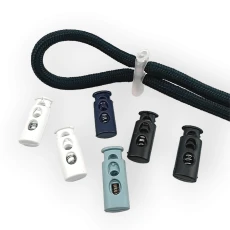
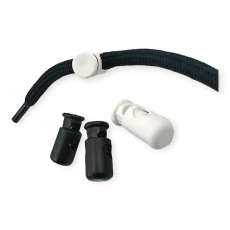
A cord lock is positioned along the drawstring rather than at its end. Its push-button or model-specific mechanism allows the cord to move during adjustment and helps hold it after the button is released.
Because the components have different functions, one finished product may use both. A hood or drawstring bag, for example, can use a cord lock for adjustment and a separate cord end on each terminal section.
Which Component Matches the Required Operation?
| Required Operation | Component to Specify | Information to Verify |
|---|
| Cover a cut drawstring end | Cord end or drawstring tip | Entry dimensions and fitting method |
| Conceal a terminal knot | Pass-through or knot-retained cord end | Internal cavity and completed knot size |
| Terminate flat cord, tape or narrow webbing | Open-edge or closed-edge pinch cord end | Material width, thickness and crimping area |
| Adjust the usable drawstring length | Cord lock or drawstring stopper | Cord opening and holding performance |
| Keep two ends in separate passages | Double-hole cord lock | Opening size of each individual channel |
| Control one cord through a shared passage | Single-hole cord lock | Normal and compressed cord diameter |
| Minimise trim weight | Plastic cord end or plastic cord lock | Body dimensions, colour and cord compatibility |
| Create a visible metal hardware detail | Metal cord end or metal cord lock | Base material, finish and component weight |
E-Buttons Cord-End and Cord-Lock Categories
Cord Ends and Drawstring Tips
Cord ends and drawstring tips are fixed terminal components. Depending on the model, they may clamp around a cord or narrow strap, retain a knot, interlock around the cord or use a bonding method.
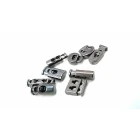
- Metal cord ends: Brass, zinc-alloy and other verified metal models in open-edge, closed-edge, cylindrical, cube, bead, bell and model-specific forms.
- Plastic cord ends: Lightweight clamp-on, interlocking and capped models with different cord-entry arrangements.
Cord Locks and Drawstring Stoppers
Cord locks and drawstring stoppers are adjustable components. Pressing the operating button releases or aligns the internal passage, while releasing it allows the mechanism to grip the cord.
- Metal cord locks: Mainly zinc-alloy models with single-hole or double-hole layouts, top-push, bridge, flat, long, square, crescent, mine-shaped and other model-specific bodies.
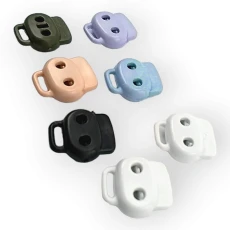
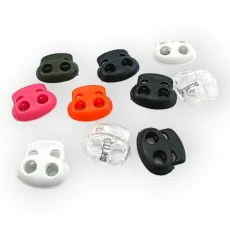
- Plastic cord locks: Plastic or acetal models in multiple colours, hole arrangements and push-button structures.
Cord-End Fitting Structures
Cord ends in this category do not all use the same installation method. Confirm the component construction before ordering.
| Fitting Structure | Operating Principle | Specification Check |
|---|
| Open-edge pinch end | The metal sides are closed around cord, tape or narrow webbing. | Compare the internal width and height with the material dimensions. |
| Closed-edge pinch end | The component surrounds more of the terminal section before being crimped. | The cord or webbing must fit the enclosed internal space. |
| Interlocking plastic end | Inner and outer pieces are pressed together around the drawstring. | Test whether the parts close fully and grip the cord. |
| Pass-through or knot-retained | The cord passes through the component and is retained by the model structure or a knot. | The completed knot must fit inside the available cavity. |
| Bond-on cord end | The drawstring is retained inside the component using an appropriate bonding process. | The adhesive must be compatible with both materials and the intended conditions of use. |
Excessive crimping pressure can flatten the cord or deform the metal component. Establish the closing pressure through sample testing before production.
Single-Hole and Double-Hole Cord Locks
A single-hole cord lock provides one shared passage. It may be used for one cord or, where the combined compressed size is suitable, two ends passing through the same channel.
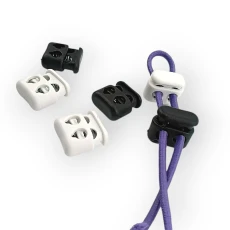
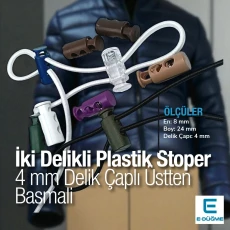
A double-hole cord lock gives each cord end a separate passage. This helps keep the ends parallel and can simplify balanced adjustment on hoods, waistbands and drawstring bags.
| Cord-Lock Type | Cord Arrangement | Selection Reason |
|---|
| Single hole | One shared passage | For one cord or compatible ends using the same route |
| Double hole | Two independent passages | For keeping two ends separated and parallel |
| Single-button double hole | Both passages are released by one button | For simultaneous adjustment of both ends |
| Bridge or side-operated model | Passage and operating direction vary by design | For model-specific cord routing and operating ergonomics |
The number of holes does not determine holding strength by itself. Cord dimensions, surface friction, spring pressure and internal geometry must be evaluated together.
How to Match Cord-Entry Dimensions
The stated cord entry is a nominal internal measurement. It does not guarantee that every cord carrying the same nominal size will fit or lock correctly.
Common round cord-lock entries visible within the product range include:
- 3 mm / 0.12 in
- 3.5 mm / 0.14 in
- 4 mm / 0.16 in
- 4.5 mm / 0.18 in
- 5 mm / 0.20 in
- 5.5 mm / 0.22 in
- 6 mm / 0.24 in
- 7 mm / 0.28 in
These values are examples from the range rather than a complete compatibility chart. Cord ends also include flat, rectangular and model-specific internal openings, so both dimensions must be checked where the opening is not round.
| Measurement | Importance for Cord Ends | Importance for Cord Locks |
|---|
| Outside cord diameter | Determines whether the cord enters the terminal component. | Affects channel fit and holding performance. |
| Compressed diameter | Affects the grip created by a pinch or interlocking model. | Shows how narrow the cord becomes under spring pressure. |
| Flat-cord width | Must match the internal width of the cord end. | Must be compared with any rectangular channel width. |
| Flat-cord thickness | Determines whether crimping is insufficient or excessive. | Affects movement through the lock. |
| Completed terminal section | A knot, sealed edge or adhesive changes the fitting process. | A finished cord end may be unable to pass through the lock. |
Material Differences
| Feature | Metal Components | Plastic Components |
|---|
| Verified material groups | Brass, zinc alloy, iron, steel or another metal specified on the product page | Plastic, acetal or another polymer specified on the product page |
| Weight | May produce a heavier and more visible hardware detail. | Adds less weight to lightweight fabrics and drawstring systems. |
| Appearance | May include nickel, black nickel, antique brass, gold, gunmetal and model-specific finishes. | May include black, white, transparent and multiple painted or moulded colours. |
| Main selection reason | Visible metal hardware and finish coordination | Low weight, colour matching and simple functionality |
A metallic colour or plated surface does not prove that the product is stainless steel. Always verify the base material and coating on the individual product page.
Real-World Applications
- Hoodie, coat and jacket drawstrings
- Tracksuit, shorts, trouser and waistband cords
- Bag, backpack, pouch and drawstring-sack closures
- Shoe, boot and trainer laces
- Adjustment cords on hats, headwear and neck warmers
- Narrow webbing, tape and compatible leather or PU strips
- Craft, jewellery and decorative cord applications
- Adjustment systems using compatible round elastic
Not every model is suitable for every application. Use the verified dimensions, material, fitting method and pack information on the individual product page for final approval.
Recommended Assembly Sequence
- Measure the cord in its normal and compressed states.
- Thread the cord lock onto the cord where an adjustable mechanism is required.
- Pass the cord through the garment channel, casing or eyelet.
- Test adjustment movement and holding performance.
- Where the completed cord end is larger than the lock passage, fit the cord end last.
- Approve crimping, interlocking or bonding through a sample assembly.
Incorrect Selection and Assembly Warnings
- A cord end is not a movable adjuster, and a cord lock is not a fixed terminal cap.
- An opening that is too small can prevent insertion or damage the cord surface.
- An opening that is too large can reduce the grip of a cord end or the holding performance of a cord lock.
- Measure both width and thickness when specifying a flat cord.
- Measure round elastic in its relaxed and lightly compressed states.
- A completed cord end may not pass through the cord-lock channel.
- Do not infer the base metal or corrosion resistance from the finish colour.
- Small-part and detachment risks must be assessed separately for children’s products.
- Complete a sample installation with the actual cord before mass production or wholesale ordering.
Related E-Buttons Categories
Frequently Asked Questions About Cord Ends and Cord Locks
What is the main difference between a cord end and a cord lock?
A cord end is a fixed component installed at the terminal section. A cord lock moves along the cord and helps control its usable length or gathering.
Can both components be used on the same drawstring?
Yes. The cord lock can operate as the adjustment mechanism, while cord ends finish the two terminal sections.
How should a cord end be measured?
Measure the outside diameter of a round cord. For flat cord, tape or webbing, measure both width and thickness and compare them with the internal opening.
How should a cord lock be selected?
Measure the cord in its normal and lightly compressed states. It must pass through the channel but should not slip freely after the mechanism is released.
Can two cord ends pass through a single-hole lock?
They may fit when their combined compressed size remains within the channel capacity. Select a double-hole lock when the ends must remain separate.
Does a pinch cord end require a press?
The required tool depends on the component size and metal thickness. Some models can be closed with controlled hand tools, while repeatable production may require a suitable crimping fixture.
How is an interlocking plastic cord end fitted?
The cord is positioned between the inner and outer sections, which are then pressed together. The completed assembly should be tested for full closure and pull resistance.
Are all metal cord ends and locks stainless?
No. Products may be made from brass, zinc alloy, iron, steel or other specified metals. Check the exact product specification rather than relying on appearance.
Which component should be installed first?
Where the completed cord end is larger than the lock channel, thread the cord lock first and install the cord end after the cord route has been completed.
Why is sample testing important?
A sample verifies entry fit, crimping or interlocking performance, cord-lock grip, operating comfort, weight, finish and appearance on the completed product.
Last updated: 21 July 2026
Business and brand: E-Buttons – Istanbul, Türkiye
Technical verification note: Refer to the individual product page for exact metric and imperial dimensions, material, colour, finish, pack quantity and fitting method.

.jpg-40x40.webp "Magnetic Snaps Buttons")

.jpg-40x40.webp "Prong Snap Fasteners for Baby Clothes")


.jpg-40x40.webp "Curved Snaps Buttons")


.jpg-40x40.webp "Snap Fasteners Half Dome type")
-no5-k0010%20(3).jpg-40x40.webp "Eyetlets")


-K0014.png-40x40.webp "Steel Eyelets and Iron Metal Grommets")

.jpg-40x40.webp "Flat Brass Eyelets and Grommets")

.jpg-40x40.webp "Aluminum Eyelets and Grommets")


.jpg-40x40.webp "Galvanized Eyelets and Grommets")


.jpg-40x40.webp "Grommet Punching Dies")
.jpg-40x40.webp "Hole Cutter Tools and Punching Dies")


.jpg-40x40.webp "Pearls Types")


.jpg-40x40.webp "Rivets")


.jpg-40x40.webp "Water-Repellent Jacket Zippers")


.jpg-40x40.webp "Tires")

.jpg-40x40.webp "Round Braided Elastic Cord")


.png-40x40.webp "Enameled Buttons")


.png-40x40.webp "Two Hole Sewing Buttons")


.jpg-40x40.webp "Carabiner Clips, Snap Hooks and Bag Hooks")


-PhotoRoom.png-40x40.webp "Spring Rings, Key Rings and Snap Clamps")


.png-40x40.webp "Hook and Eye Closures Sew-On")




.jpg-230x230.webp "Plastic Cap 5 mm Cord Entry Cord End Bell Model - Pear Model H002810")
.jpg-230x230.webp "Spring Tie End 5 mm - 0,20")
.jpg-230x230.webp "Single Hole Plastic Stopper Large Model 7 mm Hole Diameter Top Press H005026")
.jpg-230x230.webp "Metal Cord End Clamp 10mm x 9mm H00001")
.jpg-230x230.webp "Plastic Cap Cord End Bell Model 5.5 mm Cord Entry Pear Model H002522")
.jpeg-230x230.webp "Plastic Cord End Small Size Interlocking - Compression H003101")
.jpg-230x230.webp "Single Hole Plastic Stopper 7 mm Hole Diameter Top Press H003014")
.jpg-230x230.webp "Single Hole Plastic Stopper 4 mm Hole Diameter Top Press H000115")
.jpeg-230x230.webp "Plastic Cord Ends Interlocking - Compression Big Size H003022")