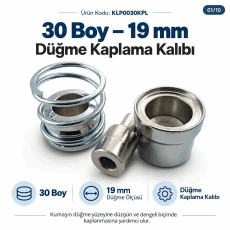
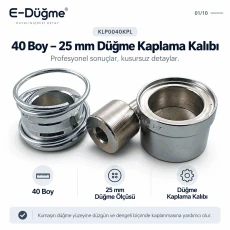
18L 11.5 mm / 0.45 in Fabric Covered Button Die KLP0018KPL is a covering die used with 18L, 11.5 mm / 0.45 in fabric-covered buttons after the fabric has already been cut to the appropriate size. It is not a fabric cutter. Fabric preparation is a separate step and requires the appropriate cutting tool. This E-Buttons English version emphasizes workshop setup, repeat orders and clear operation labeling.
What this 11.5 mm / 0.45 in covering die is for
The 11.5 mm / 0.45 in figure identifies the button size used with this covering die. 18L is the corresponding size-class reference. The fabric cutting diameter is a different specification and should be verified from the appropriate cutting-tool information rather than assumed from this product name.
Where it sits in the production sequence
This tool belongs to the covering stage. Before it is used, fabric should already have been prepared with the correct cutting tool. Cutting and covering dies may be part of the same production family, but they do not perform the same operation.
Technical summary
| Tool type | Fabric covered button die |
| Size class | 18L |
| Measurement | 11.5 mm / 0.45 in |
| Primary operation | Button covering with prepared fabric |
| Recorded weight | 400 g |
Why tool identification matters
Covered-button tooling can look similar across sizes and operations. A visual match is not enough to confirm that two tools are interchangeable. Check the model code, operation, size class and measurement together. If your actual need is to create the fabric circle, a covering die does not replace the cutting operation. Clear identification also helps teams with multiple operators or shifts.
Fabric remains a production variable
Thickness, stretch, weave or knit construction, surface treatment, pattern direction and layer count can all change material behavior. Tool measurement may stay constant while textile response changes. This is why an approved setup for one fabric should not automatically be transferred to a substantially different fabric without a sample check.
Sample before committing the full quantity
Prepare the fabric with the appropriate cutting tool, then cover a small sample using the actual button components. Check centering, surface tension, edge gathering and whether the parts close correctly before continuing with the full batch.
Pattern placement and fabric direction
Stripes, checks, logos, printed motifs and directional nap may require positioning decisions before the operation begins. Decide what should appear on the visible button face and keep orientation consistent throughout the batch. The die controls a mechanical stage, but visual placement remains part of the production plan.
Repeat-order documentation
For repeat production, record 18L, 11.5 mm / 0.45 in, model KLP0018KPL, the textile reference and the complementary tool used in the next or previous stage. Explicit job notes reduce reliance on memory and make it easier for another operator to reproduce an approved setup. A changed fabric lot should still be validated with a short sample.
Press and machine compatibility
Universal press compatibility should not be assumed from the product name. Connection geometry, working height and mechanical arrangement can vary. A tool that resembles another die may still require a different interface. Verify physical and working compatibility with the actual press or machine before production. This listing intentionally avoids unsupported universal-fit claims.
Workshop organization
When several sizes are used, store and label tooling by both operation and measurement. Keep the covering die clearly separated from fabric cutting tooling so operators can identify the correct production stage at a glance. A labeled storage system also makes missing or misplaced components easier to notice.
Quality-control points
Check the visible face for centering, wrinkles, uneven tension and excess gathering. Confirm that button components are seating correctly and compare later pieces with the approved first sample.
Limits and responsible use
This description does not claim that the tool will behave identically with every textile, fit every press, or eliminate the need for setup verification. Do not make unverified modifications that change geometry or working dimensions. If performance changes, check the textile, workstation, tool cleanliness and equipment setup before altering the tool.
Pre-order checklist
- Confirm the 18L size class.
- Confirm the 11.5 mm / 0.45 in measurement.
- Make sure you need a covering die and understand that fabric cutting is separate.
- Verify press or machine compatibility.
- Plan a sample using the actual production textile.
- Plan motif position and direction for patterned fabric.
Frequently asked questions
What is the main purpose of this tool?
It is used to cover 18L, 11.5 mm / 0.45 in buttons with pre-cut fabric.
Are 18L and 11.5 mm the same measurement?
No. The size class and the metric dimension carry different technical meanings.
Does it cut the fabric?
No. Fabric cutting is a separate operation with a cutting die.
Will it fit every press?
Universal fit should not be assumed. Verify physical and working compatibility with your equipment.
Should a new fabric be tested?
Yes. Fabric construction, thickness and stretch can change production behavior.
Is setup documentation useful for repeat orders?
Yes. Record the size, textile, model code and complementary tooling for future production.
Additional workshop note 1
A labeled workshop location for the 18L and 11.5 mm / 0.45 in tool can make repeat jobs faster to start. Include the operation name on the label so a cutter and a covering die are not selected interchangeably simply because they look similar.
Additional workshop note 2
When a repeat order uses a new fabric lot, keep the previously approved setup as a reference but still run a short validation. The tooling may be unchanged while the textile behaves differently. A first-piece check protects both material and production time.
Additional workshop note 3
During a longer batch, keep a few approved samples near the workstation. They give operators a visual reference for shape, surface appearance, and overall handling. This is particularly useful when shifts change or when more than one person works on the same order.
Additional workshop note 4
A labeled workshop location for the 18L and 11.5 mm / 0.45 in tool can make repeat jobs faster to start. Include the operation name on the label so a cutter and a covering die are not selected interchangeably simply because they look similar.
Additional workshop note 5
When a repeat order uses a new fabric lot, keep the previously approved setup as a reference but still run a short validation. The tooling may be unchanged while the textile behaves differently. A first-piece check protects both material and production time.
Additional workshop note 6
During a longer batch, keep a few approved samples near the workstation. They give operators a visual reference for shape, surface appearance, and overall handling. This is particularly useful when shifts change or when more than one person works on the same order.
Additional workshop note 7
A labeled workshop location for the 18L and 11.5 mm / 0.45 in tool can make repeat jobs faster to start. Include the operation name on the label so a cutter and a covering die are not selected interchangeably simply because they look similar.
Additional workshop note 8
When a repeat order uses a new fabric lot, keep the previously approved setup as a reference but still run a short validation. The tooling may be unchanged while the textile behaves differently. A first-piece check protects both material and production time.
Additional workshop note 9
During a longer batch, keep a few approved samples near the workstation. They give operators a visual reference for shape, surface appearance, and overall handling. This is particularly useful when shifts change or when more than one person works on the same order.
Additional workshop note 10
A labeled workshop location for the 18L and 11.5 mm / 0.45 in tool can make repeat jobs faster to start. Include the operation name on the label so a cutter and a covering die are not selected interchangeably simply because they look similar.
Additional workshop note 11
When a repeat order uses a new fabric lot, keep the previously approved setup as a reference but still run a short validation. The tooling may be unchanged while the textile behaves differently. A first-piece check protects both material and production time.
Additional workshop note 12
During a longer batch, keep a few approved samples near the workstation. They give operators a visual reference for shape, surface appearance, and overall handling. This is particularly useful when shifts change or when more than one person works on the same order.
Additional workshop note 13
A labeled workshop location for the 18L and 11.5 mm / 0.45 in tool can make repeat jobs faster to start. Include the operation name on the label so a cutter and a covering die are not selected interchangeably simply because they look similar.
Additional workshop note 14
When a repeat order uses a new fabric lot, keep the previously approved setup as a reference but still run a short validation. The tooling may be unchanged while the textile behaves differently. A first-piece check protects both material and production time.
Additional workshop note 15
During a longer batch, keep a few approved samples near the workstation. They give operators a visual reference for shape, surface appearance, and overall handling. This is particularly useful when shifts change or when more than one person works on the same order.
Additional workshop note 16
A labeled workshop location for the 18L and 11.5 mm / 0.45 in tool can make repeat jobs faster to start. Include the operation name on the label so a cutter and a covering die are not selected interchangeably simply because they look similar.

.jpg-40x40.webp "Magnetic Snaps Buttons")

.jpg-40x40.webp "Prong Snap Fasteners for Baby Clothes")


.jpg-40x40.webp "Curved Snaps Buttons")


.jpg-40x40.webp "Snap Fasteners Half Dome type")
-no5-k0010%20(3).jpg-40x40.webp "Eyetlets")


-K0014.png-40x40.webp "Steel Eyelets and Iron Metal Grommets")

.jpg-40x40.webp "Flat Brass Eyelets and Grommets")

.jpg-40x40.webp "Aluminum Eyelets and Grommets")


.jpg-40x40.webp "Galvanized Eyelets and Grommets")


.jpg-40x40.webp "Hole Cutter Tools and Punching Dies")

.jpg-40x40.webp "Grommet Punching Dies")


.jpg-40x40.webp "Pearls Types")


.jpg-40x40.webp "Rivets")


.jpg-40x40.webp "Water-Repellent Jacket Zippers")


.jpg-40x40.webp "Tires")

.jpg-40x40.webp "Round Braided Elastic Cord")


.png-40x40.webp "Enameled Buttons")


.png-40x40.webp "Two Hole Sewing Buttons")


.jpg-40x40.webp "Carabiner Clips, Snap Hooks and Bag Hooks")


-PhotoRoom.png-40x40.webp "Spring Rings, Key Rings and Snap Clamps")


.png-40x40.webp "Hook and Eye Closures Sew-On")



.png-630x630.webp "18L 11.5 mm Button Covering Die")
.png-630x630.webp "18L 11.5 mm Button Covering Die")
.png-630x630.webp "18L 11.5 mm Button Covering Die")
.png-630x630.webp "18L 11.5 mm Button Covering Die")
.png-630x630.webp "18L 11.5 mm Button Covering Die")
.png-630x630.webp "18L 11.5 mm Button Covering Die")
.png-630x630.webp "18L 11.5 mm Button Covering Die")
.png-630x630.webp "18L 11.5 mm Button Covering Die")
.png-630x630.webp "18L 11.5 mm Button Covering Die")
.png-630x630.webp "18L 11.5 mm Button Covering Die")
.png-80x80.webp "18L 11.5 mm Button Covering Die")
.png-80x80.webp "18L 11.5 mm Button Covering Die")
.png-80x80.webp "18L 11.5 mm Button Covering Die")
.png-80x80.webp "18L 11.5 mm Button Covering Die")
.png-80x80.webp "18L 11.5 mm Button Covering Die")
.png-80x80.webp "18L 11.5 mm Button Covering Die")
.png-80x80.webp "18L 11.5 mm Button Covering Die")
.png-80x80.webp "18L 11.5 mm Button Covering Die")
.png-80x80.webp "18L 11.5 mm Button Covering Die")
.png-80x80.webp "18L 11.5 mm Button Covering Die")
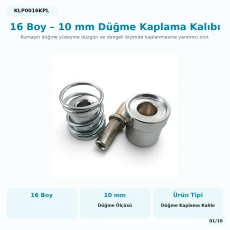
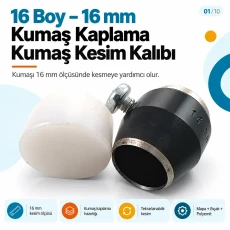
.webp-230x230.webp "18 Boy 18 mm Kumaş Kaplama Düğme İçin Kumaş Kesim Kalıbı KKSKKLP0007")
.webp-230x230.webp "22 Boy 22 mm Kumaş Kaplama Düğme İçin Kumaş Kesim Kalıbı KKSKKLP0008")