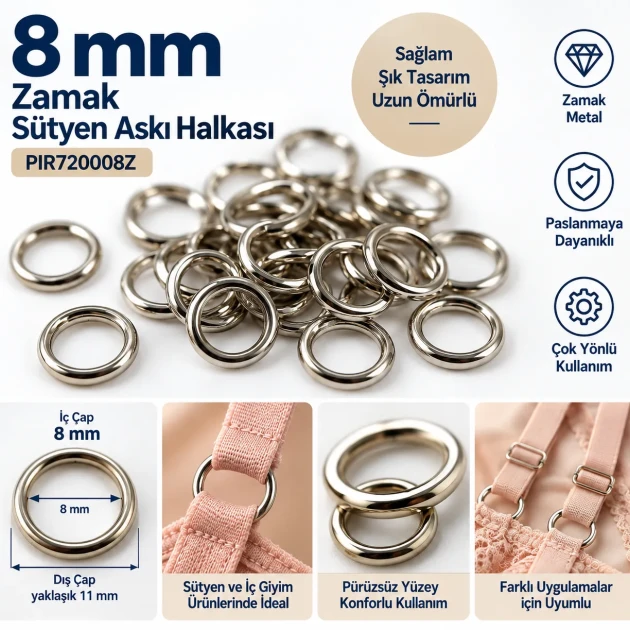
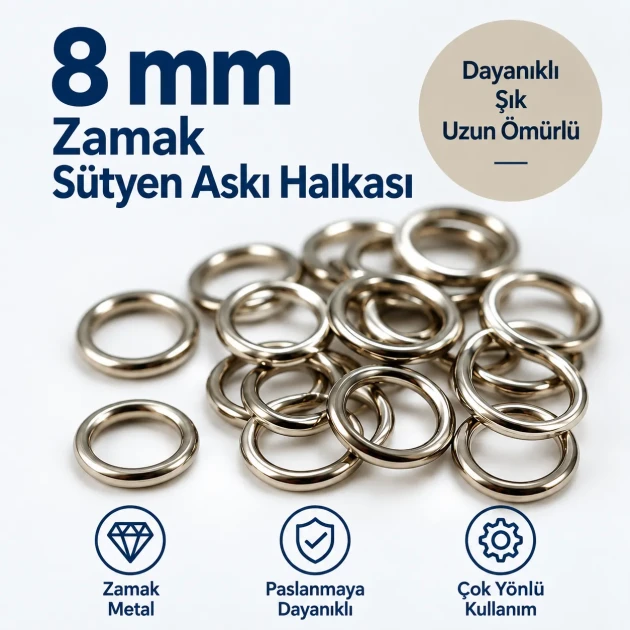
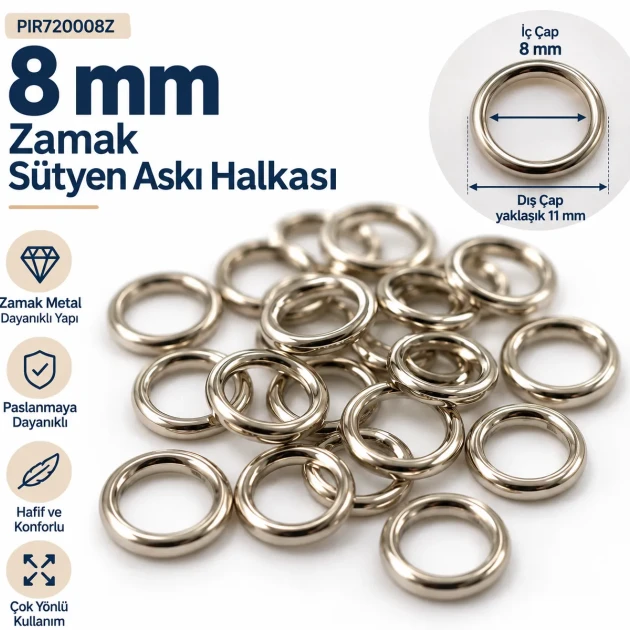
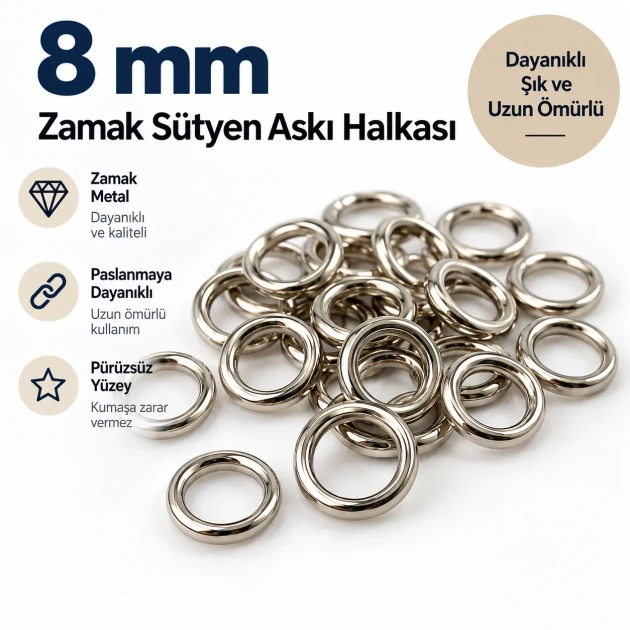
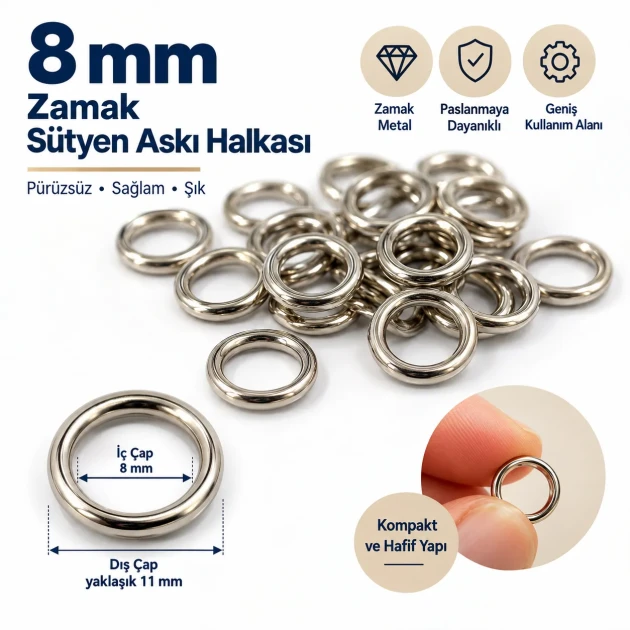
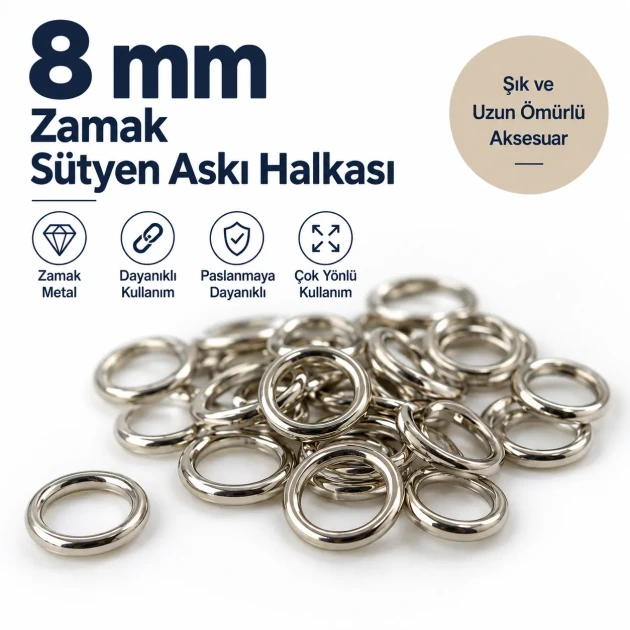
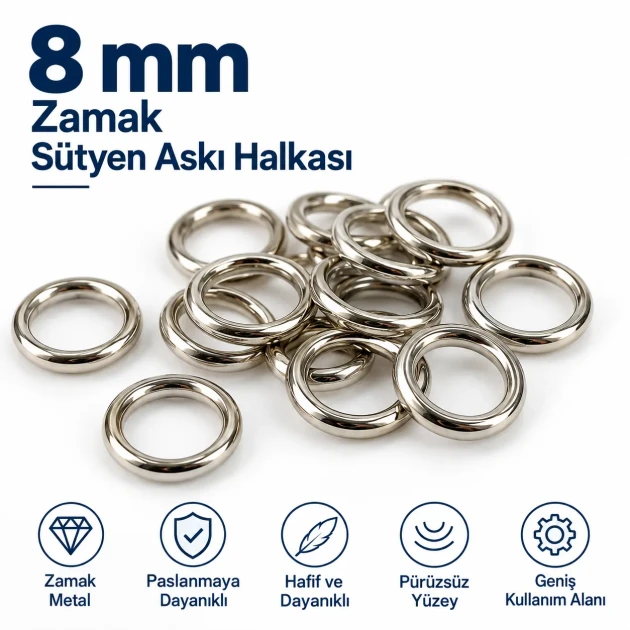
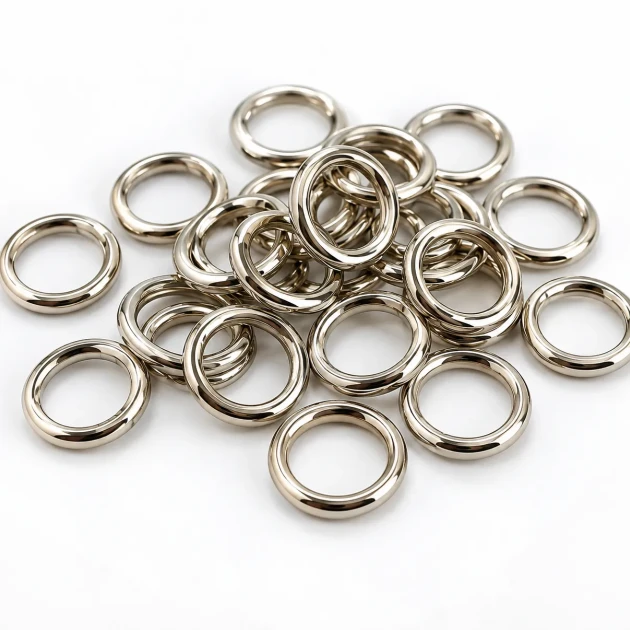
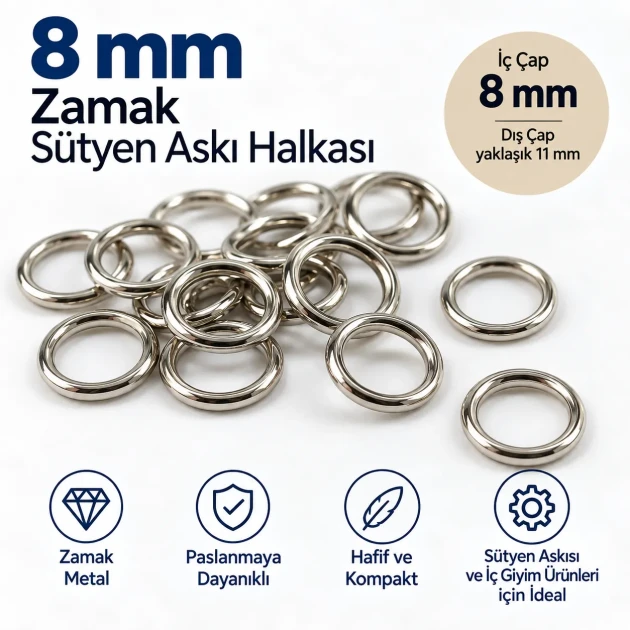
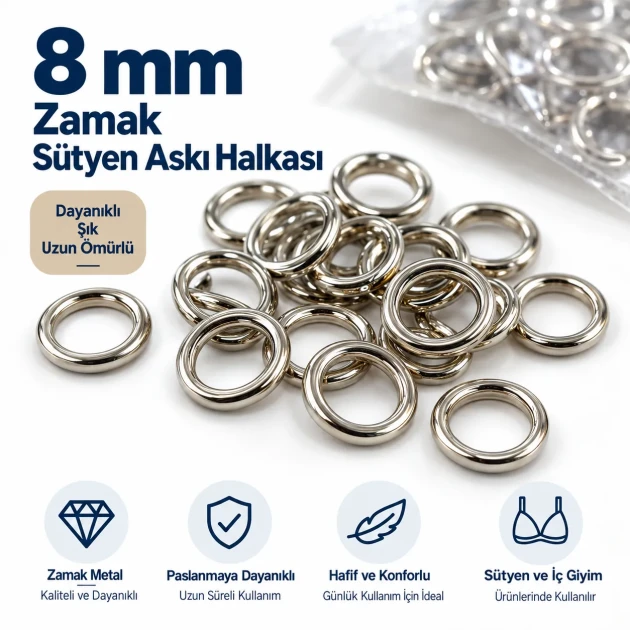
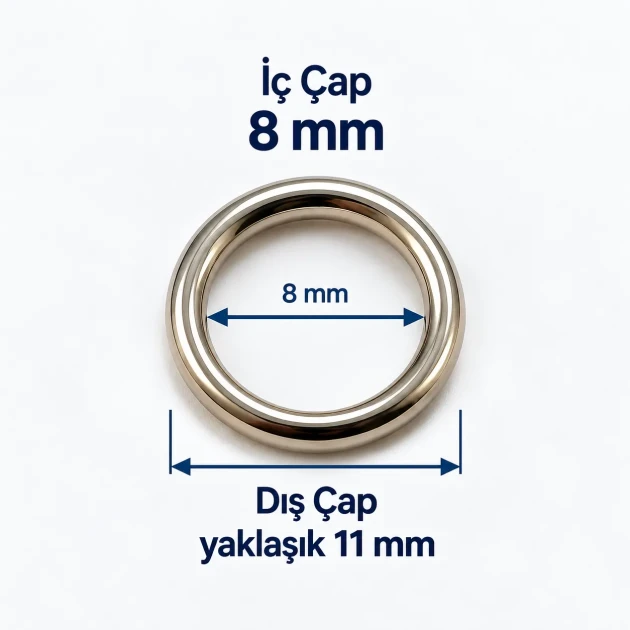
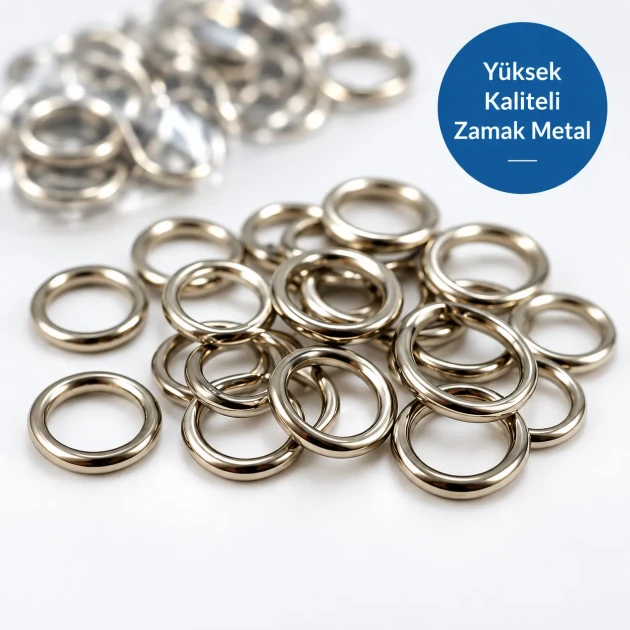
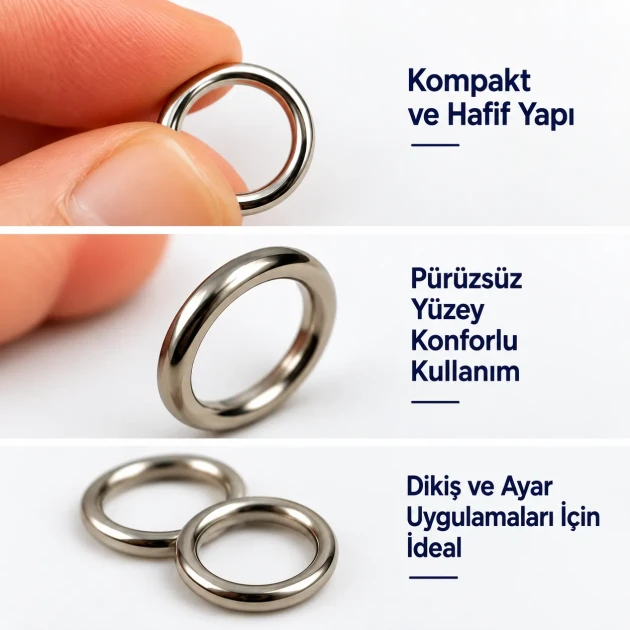
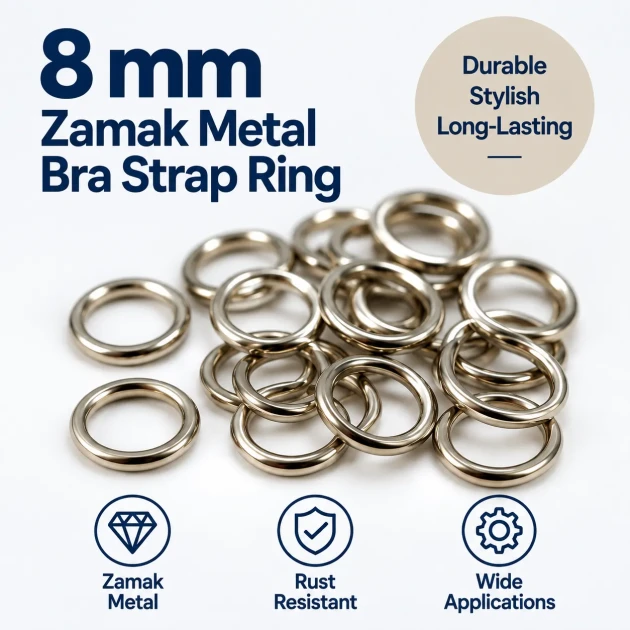
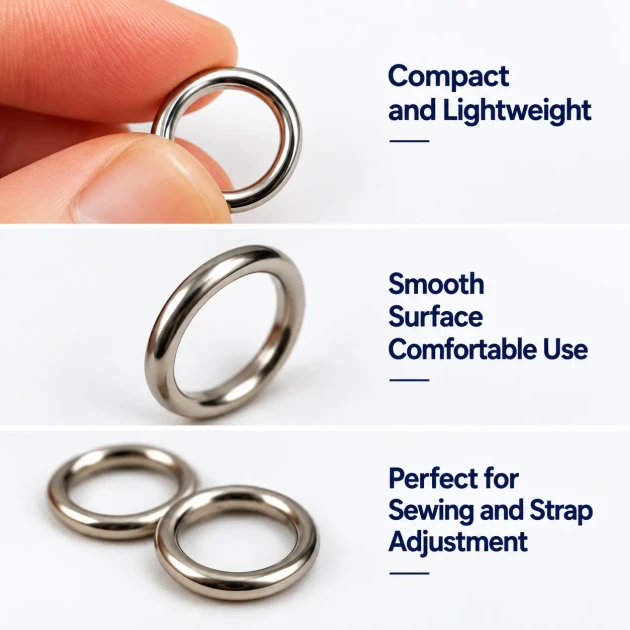
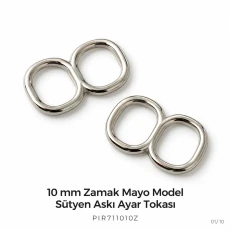
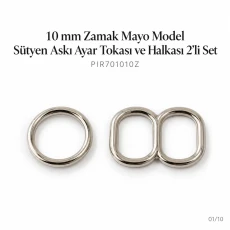
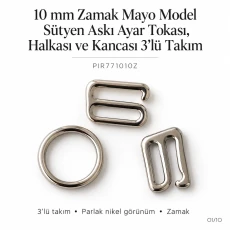
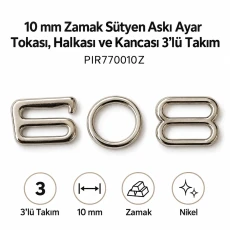
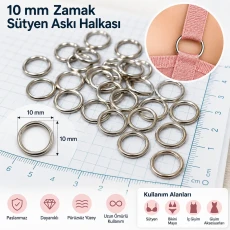
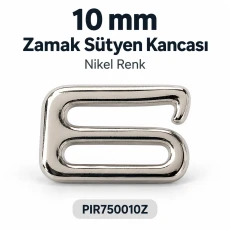
8 mm / 0.31 in Zamak Bra Strap Ring is Zamak hardware used at strap connection and direction-change points.
Product function
The ring creates a connection or direction-change point in the strap system. It does not adjust strap length. Correct use depends on evaluating the real tape and connected hardware together in the approved construction.
8 mm / 0.31 in size family
The nominal size identifies the hardware family. Actual tape width, thickness, elasticity and edge construction can vary, so compatibility should not be assumed from the size label alone. Sample-test the real production tape.
Zamak material
The product is classified as Zamak. Material, size and component type should remain separate attributes so category filters can distinguish different functions and material classes accurately.
Applications
The ring can be considered for bras, bralettes, bikinis, swimwear, bodysuits and similar narrow-strap garments. Final use should follow the approved strap geometry and sample.
Difference from slider and hook
The ring organizes a connection point; the slider adjusts strap length; the hook completes a connection. Sharing the same size family does not make these components interchangeable.
Live related products
Use the live Bra Rings, Hooks and Strap Adjustment Buckles category for broader comparison. The live 8 mm / 0.31 in slider, 8 mm / 0.31 in hook and 8 mm / 0.31 in 2-piece set show different functions within the same hardware family.
Sample testing
Route the real production tape through the ring and check connection angle, folded thickness, stitch distance and behavior under tension. Review the ring in the final garment position, not only on a flat table.
Technical sheet
Model product, component type Ring, 8 mm / 0.31 in size family, Zamak material and package content should be recorded. If strap tape changes, prior approval should not automatically be assumed valid.
Bulk production
Compare initial completed straps with the approved sample. If connection angle, play or tape folding changes, review both the production tape and assembly method.
Purchasing checks
Before ordering, confirm component type, size, material, package content and minimum order quantity. Selecting only by visual similarity increases the risk of ordering the wrong functional part.
Package content
One sales unit contains one ring. The minimum order is 500 pieces. Package content and minimum order quantity are different concepts and should be tracked separately.
Warehouse management
Rings, hooks, sliders and sets should remain under separate model codes. Shelf labels should show both model and component type to reduce picking errors.
Signs of a mismatch
If the tape binds, has excessive play, creates a poor connection angle or looks out of proportion, review the size and tape construction.
Quality control
Check ring form, tape passage, connection angle and stitch position against the approved sample. Consistent behavior should be maintained throughout the production run.
Repeat orders
Use model product together with component type, size and material rather than a generic phrase such as 8 mm ring. This reduces confusion with similar products.
Care approach
No verified special coating endurance or chemical-care specification is provided, so those claims are not added. Final garment care should consider the complete material system.
Frequently Asked Questions
What size family is the ring in?
It belongs to the 8 mm / 0.31 in strap-hardware family and should be sample-tested with the real tape.
Is a ring the same as a slider?
No. The ring creates a connection or direction-change point; the slider adjusts strap length.
What is the material?
Zamak.
What is included?
1 bra strap ring.
What is the minimum order?
500 pieces.
What should be checked before bulk production?
Test the real strap tape and completed connection on the approved sample.
Final production verification
Compare the approved sample with the current production tape again before committing to bulk quantity. If tape lot, thickness, elasticity or stitch construction has changed, previous approval should not automatically be considered valid. A short verification sample can confirm ring size, connection direction and strap-system behavior before a larger run is assembled.
Tape thickness and ring fit
The actual production tape can behave differently even when the nominal width is unchanged because thickness and elasticity vary. Approval should use the completed strap rather than confirming only that the tape passes through the ring. On e-buttons, component type, the 8 mm / 0.31 in size family and Zamak material should be reviewed together. If a problem appears, compare tape thickness, folding, stitch position and connection direction before replacing the hardware. A short verification sample before a large run helps identify variation early and supports repeat orders with the same approved component.
Checking connection angle
A ring creates a connection or direction-change point, so its real angle should be checked on the assembled strap. Recording fold direction and stitch distance on the technical sheet helps operators reproduce the approved construction. On e-buttons, component type, the 8 mm / 0.31 in size family and Zamak material should be reviewed together. If a problem appears, compare tape thickness, folding, stitch position and connection direction before replacing the hardware. A short verification sample before a large run helps identify variation early and supports repeat orders with the same approved component.
Fold allowance and stitch distance
Folded tape is thicker than a flat layer and stitch position can influence the way the ring sits on the garment. Using model product consistently across purchasing, warehouse and production documents reduces confusion with similar hardware. On e-buttons, component type, the 8 mm / 0.31 in size family and Zamak material should be reviewed together. If a problem appears, compare tape thickness, folding, stitch position and connection direction before replacing the hardware. A short verification sample before a large run helps identify variation early and supports repeat orders with the same approved component.
Effect of elasticity
Elastic tape narrows and changes angle under tension, which can alter the finished connection. A single ring represents one physical piece, while set products can represent several components per sales unit, so inventory logic should remain separate. On e-buttons, component type, the 8 mm / 0.31 in size family and Zamak material should be reviewed together. If a problem appears, compare tape thickness, folding, stitch position and connection direction before replacing the hardware. A short verification sample before a large run helps identify variation early and supports repeat orders with the same approved component.
Single ring versus set formats
First-run production check
Warehouse labeling standard
Repeat-order discipline
Root-cause quality review
Production quantity planning
Using an approved reference sample
Final pre-purchase check
Using an approved image as a warehouse reference
For small metal hardware such as product, the model code remains the primary identifier, but an approved sample image can add a useful visual check. When rings, sliders and hooks share the same nominal size, a reference image helps staff distinguish component types quickly. It does not replace the code; it works as a second control that can reduce incorrect material issue and help new team members learn the approved part.
Ring position at a strap direction change
A ring is often used where the strap changes direction, so its position affects both geometry and appearance. Stitching placed too close or too far from the connection can alter the angle. Sampling should review how the ring sits on the finished garment, how the strap approaches the shoulder or connection point and whether the tape twists unnecessarily around the metal.
Different textile and elastic combinations
The same ring can behave differently when used with another elastic or fabric system. A firmer strap may create a more defined connection angle, while a softer elastic may allow more movement. Product development should therefore evaluate the ring as part of the textile system rather than as an isolated metal measurement. New material combinations deserve a short sample check instead of automatically carrying approval from a previous style.
Reducing wrong-part risk on the production floor
When several small components exist in the same 8 mm / 0.31 in family, visual selection alone is risky. The container issued to production should show model code, component type, size and material clearly. Operators can compare the label with the technical sheet before assembly begins. This simple check is particularly useful during the first hours of a production run, when a wrong component could otherwise spread through a large quantity.
Flexibility of single-component sourcing
Buying a single ring can be useful when ring consumption does not match slider or hook consumption. Some styles may use the same ring with different adjustment hardware, while others may not use a hook at all. Set products can still be appropriate when consumption ratios match, but single-component sourcing may give more precise inventory control when they do not. The decision should follow physical usage in the bill of materials.
Archiving the approved reference
After a production run, keeping an approved ring sample or completed strap reference can support later repeat orders. When the style returns, the team can compare the new production against a physical or visual reference rather than relying only on an old purchase record. This is especially useful when product names are similar or the same garment returns after a long interval.
Using category filters in the right order
A practical filter sequence is to choose component type Bra Strap Ring first, then narrow by 8 mm / 0.31 in size and Zamak material. Filtering by size alone can leave sliders, hooks and set products in the result. Using function as the first selection step makes the catalog easier to navigate for production buyers and reduces the chance of choosing a different component that happens to share the same nominal width.
Feedback after production
Feedback from assembly teams can be useful for later orders of the same ring. If operators repeatedly report a routing, stitching or connection-angle issue, that observation can be recorded on the technical sheet and checked during the next sample. The feedback should be treated as production experience rather than as an unverified product-performance claim, and any change should be confirmed with the actual materials.
Recording the ring on the design file
The design file should record not only strap width but also the approved ring model and size family. When the style is reopened for a later production season, the team can see which component was previously approved instead of selecting a visually similar item. This traceability can shorten repeat sampling and reduce ambiguity during sourcing.
Cross-checking teams before production starts
Before a high-volume run begins, purchasing, warehouse and production teams should confirm that they are all using product. Even when the correct item was purchased, a different ring can be issued from storage if labels are unclear. A brief start-up check confirms that the purchased component and the component at the production line are the same.
Checking symmetry at the final garment
If rings are used on both left and right straps, their connection angles should look reasonably consistent. Stitch distance, tape-turn direction and ring orientation should create a balanced appearance. This final review supports visual consistency in addition to functional correctness and can reveal assembly differences before the garments reach final packing.
Final purchasing confirmation
Before ordering, confirm product, component type Bra Strap Ring, 8 mm / 0.31 in size and Zamak material. One sales unit contains one ring and the minimum order is 500 pieces. Confirm the related slider or hook required in the same strap system and sample the actual production tape. This final check keeps purchasing aligned with the approved construction and reduces ambiguity at repeat-order stage.