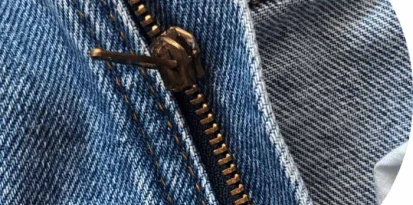
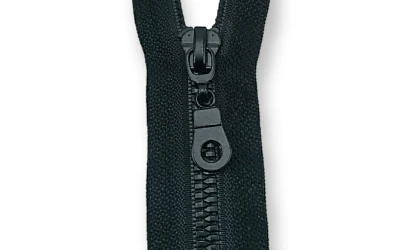
Tarpaulin Zipper #20 Nylon Coil Tent Zipper is a zipper listed by E-Buttons under Continuous Zipper Chain – Zipper by the Metre. The verified identifiers used on this page are the product name, category, and the size wording explicitly shown in the product title. Material or surface information is limited to Nylon; unpublished specifications are not added. For correct selection, treat the nominal size as a starting point and evaluate it with the real material, mating component, and installation method used in production.
Selection and technical checks for Tarpaulin Zipper #20 Nylon Coil Tent Zipper
A sewing sample should confirm tape behavior, slider travel, seam allowance near the ends, and the opening direction required by the final product.
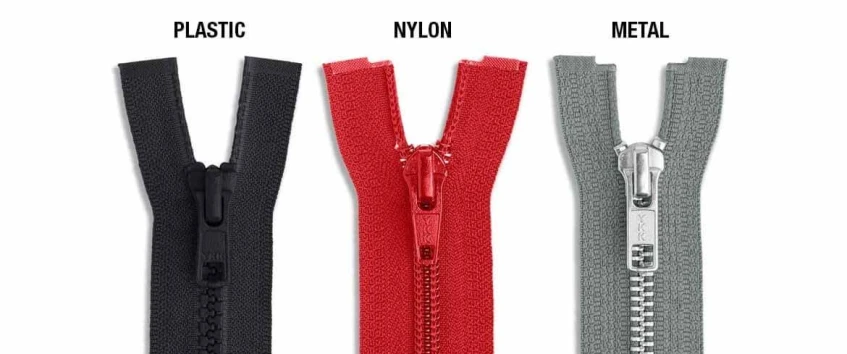
Zipper selection should not be based on length alone. Chain or tooth construction, end type, slider configuration, and whether the item is a finished-length zipper or continuous chain all affect suitability. Interpret a T-size or other size marking only within the verified product construction.
Finished zippers and continuous zipper chain have different purchasing logic. Whether a slider is included should be confirmed for continuous-chain products rather than assumed from an image or category name.
Production sampling and quality-control approach
Sampling may be a small step, but it is one of the most effective ways to reduce purchasing risk. Testing the part on the real fabric, strap, cord, or mating component lets size, assembly result, and appearance be reviewed together. Recording the approved model and critical dimension in the production file also reduces confusion on repeat orders.
Incoming inspection should include more than counting pieces. Random samples can be checked for visible surface condition, dimensional consistency, burrs or deformation, movement of functional parts, and connection with the mating component when applicable. Acceptance limits should come from the manufacturer’s own quality system; unpublished tolerances should not be invented in product copy.
Color and surface finish should be evaluated after technical compatibility. Screen settings, photographic lighting, and natural lot variation can change how a finish appears. When zippers, buckles, buttons, eyelets, or other metal hardware must match within one collection, comparing physical samples side by side is more reliable than screen color alone.
The unit price of an accessory is not the only production cost. Wrong sizing, incompatible tooling, incorrect setting, or rework can create more expense than a small difference in component price. Purchasing teams can therefore treat technical review and sample approval as part of cost control rather than as separate administrative steps.
Commercial conditions can change over time. Current stock, price, color options, minimum order, and delivery information should be checked on the live page at the time of purchase. This description focuses on selection and verification instead of turning changeable commercial information into permanent technical claims.
Checks to complete before bulk production
Successful use in an earlier project does not automatically prove suitability in a new one. Fabric layers, strap thickness, cord braid, seam allowance, or connection orientation can change how the same hardware behaves. Critical connection points should be re-checked whenever the construction of the final product changes.
Press settings also affect results for hardware that uses setting tools. Even with the correct die, too much or too little pressure can leave surface marks, loose connections, or material deformation. When the supplier does not publish a specific force value, do not invent a universal setting; establish the correct process gradually on samples.
Using precise terminology reduces purchasing errors. A Punching Die and a Setting Die, inner size and outer size, product diameter and strap opening, or zipper chain and a finished zipper are different concepts. Purchase notes should state what the critical dimension actually measures instead of listing a number without context.
Traceability between warehouse and production is easier when the model code remains the primary identifier. When similar parts share storage areas or names, labels that include model, size, and approved color or finish help prevent mixing. This is especially useful for repeat orders within the same season.
Final-product inspection should look at more than whether the accessory can be attached. Depending on the item, review opening and closing, movement, friction, rotation, pulling on the fabric, or pressure on the seam. If the page does not publish a cycle-life value, the content should not promise a specific service life.
Checks to complete before bulk production
When considering an alternative model, compare more than price and appearance. Re-check the critical dimensions, connection point, stated material, and installation method. Products listed in the same category are not automatically direct replacements; a category indicates a related buying intent, while technical interchangeability requires separate verification.
E-Buttons content does not add unsupported certification, corrosion resistance, waterproofing, heavy-duty, or safety-performance claims. If those requirements are critical to a project, obtain written technical confirmation before purchase so that catalog copy is not mistaken for an engineering specification.
Before bulk production, a final checklist should confirm the correct model, correct size, correct color or finish, correct mating component, and correct installation method on the same approved sample. Reviewing those points together provides a stronger purchasing basis than the product name alone.
The goal of E-Buttons product content is not to repeat the product name, but to make the checks that affect purchasing and production decisions easy to see. Verified facts are kept separate from practical production guidance. Values that are not present in the title or live product information are not presented as technical specifications; critical dimensions should be confirmed with a sample or direct technical verification.
When comparing similar-looking accessories, evaluate the product family, size, connection method, and function in the final item together. Two parts that look alike in a photo may differ in clear opening, barrel length, wire section, tooth construction, or backside geometry. Those differences matter most when the same small mismatch would be repeated across a production run.
Frequently Asked Questions
What should be checked first when selecting this product?
Review the product title, category, verified size information, and any stated material details together. Confirm fit with the real fabric, strap, cord, or mating component before bulk production.
Can another model with the same nominal size be substituted directly?
Not automatically. The same nominal size does not prove identical outside geometry, connection method, or installation system. Repeat sample validation when the model changes.
Will the color or finish look exactly like the screen image?
Screen and lighting conditions can change color perception. Physical samples or same-lot approval are more reliable when exact matching is important.
Why is a sample recommended before bulk production?
A sample lets you review size, assembly result, appearance, and movement in the final construction at the same time, helping prevent a small mismatch from being repeated at high volume.
Why are some technical values not included in this description?
Only verified information is used. Strength, certification, coating thickness, or special compatibility values are not invented when the product page does not provide them.
Why are live price and stock not written into the description?
Price, stock, and commercial options can change, so they should be checked on the live E-Buttons product page when the order is placed.
Additional check for Tarpaulin Zipper #20 Nylon Coil Tent Zipper: Commercial conditions can change over time. Current stock, price, color options, minimum order, and delivery information should be checked on the live page at the time of purchase. This description focuses on selection and verification instead of turning changeable commercial information into permanent technical claims.
Additional check for Tarpaulin Zipper #20 Nylon Coil Tent Zipper: Successful use in an earlier project does not automatically prove suitability in a new one. Fabric layers, strap thickness, cord braid, seam allowance, or connection orientation can change how the same hardware behaves. Critical connection points should be re-checked whenever the construction of the final product changes.
Additional check for Tarpaulin Zipper #20 Nylon Coil Tent Zipper: Press settings also affect results for hardware that uses setting tools. Even with the correct die, too much or too little pressure can leave surface marks, loose connections, or material deformation. When the supplier does not publish a specific force value, do not invent a universal setting; establish the correct process gradually on samples.
Additional check for Tarpaulin Zipper #20 Nylon Coil Tent Zipper: Using precise terminology reduces purchasing errors. A Punching Die and a Setting Die, inner size and outer size, product diameter and strap opening, or zipper chain and a finished zipper are different concepts. Purchase notes should state what the critical dimension actually measures instead of listing a number without context.
Additional check for Tarpaulin Zipper #20 Nylon Coil Tent Zipper: Traceability between warehouse and production is easier when the model code remains the primary identifier. When similar parts share storage areas or names, labels that include model, size, and approved color or finish help prevent mixing. This is especially useful for repeat orders within the same season.
Additional check for Tarpaulin Zipper #20 Nylon Coil Tent Zipper: Final-product inspection should look at more than whether the accessory can be attached. Depending on the item, review opening and closing, movement, friction, rotation, pulling on the fabric, or pressure on the seam. If the page does not publish a cycle-life value, the content should not promise a specific service life.
Final selection and pre-production check
Before bulk production, verify this item again on a sample made with the actual fabric, strap, cord, or mating component. Confirm that the critical dimension is being measured at the correct point, the installation direction matches the production plan, the finish and color are acceptable beside the other hardware in the collection, and the assembled part does not create unwanted friction, twisting, binding, or deformation during normal handling. For repeat purchasing, record the approved model, critical dimension, and color in the production file so that visually similar parts are not mixed. Recheck current options, stock, and commercial information on the live E-Buttons page when ordering. Do not assume an unlisted material grade, strength rating, certification, or special performance characteristic.

.jpg-40x40.webp "Magnetic Snaps Buttons")

.jpg-40x40.webp "Prong Snap Fasteners for Baby Clothes")


.jpg-40x40.webp "Curved Snaps Buttons")


.jpg-40x40.webp "Snap Fasteners Half Dome type")
-no5-k0010%20(3).jpg-40x40.webp "Eyetlets")


-K0014.png-40x40.webp "Steel Eyelets and Iron Metal Grommets")

.jpg-40x40.webp "Flat Brass Eyelets and Grommets")

.jpg-40x40.webp "Aluminum Eyelets and Grommets")


.jpg-40x40.webp "Galvanized Eyelets and Grommets")


.jpg-40x40.webp "Hole Cutter Tools and Punching Dies")

.jpg-40x40.webp "Grommet Punching Dies")


.jpg-40x40.webp "Pearls Types")


.jpg-40x40.webp "Rivets")


.jpg-40x40.webp "Water-Repellent Jacket Zippers")


.jpg-40x40.webp "Tires")

.jpg-40x40.webp "Round Braided Elastic Cord")


.png-40x40.webp "Enameled Buttons")


.png-40x40.webp "Two Hole Sewing Buttons")


.jpg-40x40.webp "Carabiner Clips, Snap Hooks and Bag Hooks")


-PhotoRoom.png-40x40.webp "Spring Rings, Key Rings and Snap Clamps")


.png-40x40.webp "Hook and Eye Closures Sew-On")



.jpg-630x630.webp "Tarpaulin Zipper #20 Nylon Coil Tent Zipper | E-Buttons")
.jpg-630x630.webp "Tarpaulin Zipper #20 Nylon Coil Tent Zipper | E-Buttons")
.jpg-630x630.webp "Tarpaulin Zipper #20 Nylon Coil Tent Zipper | E-Buttons")
.jpg-630x630.webp "Tarpaulin Zipper #20 Nylon Coil Tent Zipper | E-Buttons")
.jpg-80x80.webp "Tarpaulin Zipper #20 Nylon Coil Tent Zipper | E-Buttons")
.jpg-80x80.webp "Tarpaulin Zipper #20 Nylon Coil Tent Zipper | E-Buttons")
.jpg-80x80.webp "Tarpaulin Zipper #20 Nylon Coil Tent Zipper | E-Buttons")
.jpg-80x80.webp "Tarpaulin Zipper #20 Nylon Coil Tent Zipper | E-Buttons")


_8_11zon.jpg-185x185.webp "#20 Double-Pull Nylon Zipper Slider for Tents and Tarpaulins SB002N20C")