What Are Eyelet Setting Dies and Application Tools?
Eyelet setting dies and application tools are used to install eyelets, grommets, caps and washer-supported metal accessories onto fabric, leather, faux leather, bags, shoes, tarpaulin, awnings, tents, banners, vinyl prints and technical textile surfaces. This category includes not only standard eyelet setting dies, but also eyelet punching dies, standard setting tools, reverse dies, self-piercing eyelet setting dies, oval eyelet dies, cap application dies and eyelet die systems compatible with different press machines.
Choosing the correct die is essential for clean and consistent eyelet application. The eyelet number, inner diameter, outer diameter, barrel height, washer structure, material type and machine system should be checked together before selecting a setting die.
Difference Between Eyelet Punching Dies, Standard Setting Tools and Reverse Dies
| Tool Type | Function | When to Use |
|---|
| Eyelet Punching Die | Punches the hole where the eyelet will pass through the material. | Used when a pre-hole is required on fabric, leather, tarpaulin, vinyl, tent fabric or technical textiles. |
| Standard Eyelet Setting Tool | Sets the eyelet and washer into a pre-punched hole. | Used for standard eyelet applications after the hole has been prepared. |
| Reverse Die | Allows the eyelet to close from the reverse side or with a special closing form. | Used when the back-side appearance, washer structure or application direction is important. |
| Self-Piercing Eyelet Setting Die | Supports punching and setting in the same application for compatible eyelet systems. | Used with self-piercing eyelets when the material can be pierced during installation without a separate punching step. |
In simple terms, a punching die makes the hole, a standard setting tool installs the eyelet, a reverse die is used for special application direction, and a self-piercing setting die can support both piercing and setting for compatible eyelet systems.
Eyelet Number Guide for Die Selection
Eyelet dies should not be selected only by the eyelet number. Eyelets with the same number may have different inner diameters, outer diameters, barrel heights, washer structures and material types. Still, eyelet numbers can be used as a practical starting point for selection.
| Eyelet Number | Typical Application | What to Check Before Selecting the Die |
|---|
| No. 2 | Thin textiles, footwear and small accessories | Inner diameter, material thickness and hole diameter should be checked. |
| No. 3 | Textiles, small leather goods and light applications | Check whether a standard die or a self-piercing reverse die is required. |
| No. 4 | Footwear, bags and textile accessories | Barrel height and material thickness should be evaluated together. |
| No. 5 | Bags, curtains, textiles and coin-style eyelets | Cap shape and outer diameter should match the die surface. |
| No. 8 | Bags, leather goods, textiles and medium-thickness surfaces | Hole diameter, washer structure and setting tool compatibility should be checked. |
| No. 10 - No. 12 | Bags, leather goods and textile accessories | Standard setting tools and punching dies may need to be evaluated together. |
| No. 18 - No. 20 | Thicker textiles, canvas, bags and technical fabrics | Barrel height, material thickness and press system are important. |
| No. 24 | Bags, textiles, tarpaulin, leather and general-purpose applications | Standard No. 24 and stainless steel No. 24 eyelets should not be assumed to have the same real inner diameter. |
| No. 28 | Tarpaulin, awnings, tents and technical textiles | The need for a standard die, reverse die or self-piercing die should be determined according to the eyelet type. |
| No. 30 - No. 32 - No. 34 | Tarpaulin, awnings, tents and tensioning systems | Washer structure, hole diameter, barrel height and press power should be checked together. |
| No. 66 | Heavy-duty tarpaulin, truck covers, large awnings and industrial covers | Large eyelet size, washer, hole diameter and strong press system should be evaluated together. |
When Should a Standard Eyelet Setting Tool Be Used?
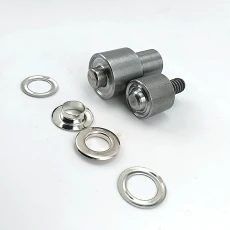
A standard eyelet setting tool is used to install the eyelet and washer into a pre-punched hole. In this system, the hole is prepared first, the eyelet is placed into the material, and then the setting tool closes the eyelet into position.
Standard setting tools are the most common die group for textile, leather, bag, footwear, tarpaulin and technical textile applications. The eyelet number, inner diameter, barrel height and washer structure directly affect the correct setting tool selection.
What Is a Reverse Die?
A reverse die is a special die used when the eyelet needs to close from a different direction or when the reverse side of the product must have a more controlled finish.
In some eyelet systems, a reverse die may be required to create a cleaner back-side form or to support the correct application direction in self-piercing systems. Die direction can be especially important in technical textiles, tarpaulin, bags and special accessory production.
What Is a Self-Piercing Eyelet Setting Die?
A self-piercing eyelet setting die is used with compatible eyelet systems where the eyelet can pierce the material and close during the same application. In this structure, the cutting or piercing part of the eyelet can pass through the surface during installation.
This system can be practical for suitable textile, vinyl, faux leather and some technical fabric surfaces. However, for thick tarpaulin, multi-layer leather or heavy technical textiles, using a separate punching die may provide a more controlled result.
No. 24 Eyelet Dies
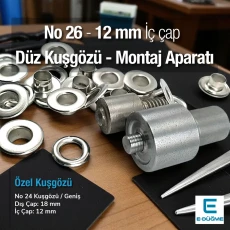
No. 24 eyelet dies are among the most commonly requested die groups. This size is used in textiles, bags, leather, tarpaulin and many general-purpose applications. However, the term “No. 24” alone is not enough for correct die selection.
The real inner diameter may differ between standard No. 24 eyelets and stainless steel No. 24 eyelets. For this reason, the actual measurement, material, barrel height and setting system should be evaluated together before selecting the die.
No. 28 Self-Piercing Eyelet Dies
No. 28 eyelets can be used in tarpaulin, awning, tent and technical textile applications. Some No. 28 eyelet systems may have a self-piercing structure. In that case, a self-piercing eyelet die or reverse die may be required instead of a standard setting tool.
For No. 28 self-piercing eyelet applications, material thickness, the cutting barrel structure of the eyelet, washer use and press system should be checked carefully.
Oval Eyelet Dies
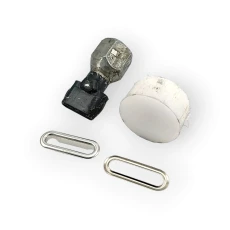
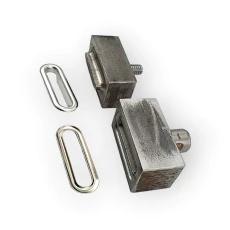
Oval eyelets have a different shape from standard round eyelets. Therefore, round eyelet dies should not be used for oval eyelets. A special oval eyelet die is required to close the oval form correctly without deforming it.
Oval eyelets can be used in 1 cm, 1.5 cm, 2 cm, 2.5 cm and 3 cm sizes. They are commonly used in tarpaulin, tents, shade systems, caravan equipment, marine products and technical textile applications. Related products can be reviewed under the oval eyelets category.
Stainless Steel Eyelet Dies
Stainless steel eyelets can behave differently from brass or steel eyelets during setting. Due to material hardness, a standard die may not always provide the same result.
When selecting a die for stainless steel eyelets, real inner diameter, outer diameter, barrel height, washer structure and press system should be checked together. Related products can be reviewed under the stainless steel eyelets category.
Tarpaulin, Awning and Tent Applications
In tarpaulin, awning and tent applications, eyelets may be exposed to higher pulling forces. For this reason, not only the eyelet number but also surface thickness, washer structure and barrel height are important.
Especially for No. 28, No. 30, No. 32, No. 34 and No. 66 eyelet systems, hole diameter, barrel height, washer form and press power should be evaluated together.
Choosing Eyelet Dies by Press System
Hand-Setting Eyelet Dies
Hand-setting dies can be used for low-volume applications, sample production and small workshops. Since the application force depends on the user, they may not always provide the same consistency in mass production.
Eyelet Dies Compatible with Hand Presses
Hand presses are widely used manual press systems in workshops. Compatible die connection should be checked before using them for eyelets, snaps, rivets and similar accessories.
Eyelet Dies Compatible with Impact Presses
Impact presses can be preferred by workshops that need a more controlled application. Correct die selection and proper pressure are important for balanced eyelet closing.
Eyelet Dies Compatible with Electric and Pneumatic Machines
Electric and pneumatic machines are preferred for high-volume production. In these systems, die connection size, machine standard and eyelet size should be compatible. For mass production systems, the mounting machines and hand tools category can be reviewed.
Common Mistakes in Eyelet Application
- Selecting a die only by eyelet number
- Confusing a standard die with a self-piercing die
- Using a standard setting tool where a reverse die is required
- Thinking that punching dies and setting tools are the same product
- Using a round die for oval eyelets
- Using a standard die for stainless steel eyelets without checking real measurements
- Punching the hole too large or too small
- Ignoring barrel height
- Placing the washer in the wrong direction
- Using an incompatible press system
Eyelet Die Buying Guide
| Information to Check | Why It Matters |
|---|
| Eyelet number | It gives the first general size reference. |
| Real inner diameter | Required for hole diameter and die centering compatibility. |
| Outer diameter | Affects how the die supports the outer eyelet form. |
| Barrel height | Directly affects how the eyelet closes. |
| Standard, reverse or self-piercing structure | Determines the correct setting tool type. |
| Washer or non-washer use | Affects the lower die form and closing structure. |
| Eyelet material | Brass, stainless steel or steel eyelets can behave differently during setting. |
| Press system | Required for die connection standard and machine compatibility. |
Frequently Asked Questions
What does a standard eyelet setting tool do?
It is used to set the eyelet and washer into a pre-punched hole.
What is a reverse die?
A reverse die is used when the eyelet needs to close in a special direction or when the back-side form needs to be controlled.
What is a self-piercing eyelet setting die?
It is a die that supports piercing and setting in the same application for compatible self-piercing eyelet systems.
Are punching dies and setting tools the same?
No. A punching die makes the hole, while a setting tool installs the eyelet.
Which die is required for No. 24 eyelets?
The real inner diameter, outer diameter and barrel height should be checked. Standard and stainless steel No. 24 eyelets may require different die compatibility.
Which die is used for No. 28 self-piercing eyelets?
A self-piercing compatible reverse die or special die may be required instead of a standard setting tool.
Which tool is required for No. 66 eyelets?
For No. 66 tarpaulin eyelets, large eyelet size, washer, hole diameter and a strong press system should be evaluated together.
Can oval eyelets be applied with a standard round die?
No. Oval eyelets require a special oval die.
Why does an eyelet close unevenly?
It may happen because of an incorrect die, wrong hole diameter, incompatible press system or uneven pressure.
Why does an eyelet stay loose?
The hole may be too large, the die may be incompatible, or the applied pressure may be insufficient.

.jpg-40x40.webp "Magnetic Snaps Buttons")

.jpg-40x40.webp "Prong Snap Fasteners for Baby Clothes")


.jpg-40x40.webp "Curved Snaps Buttons")


.jpg-40x40.webp "Snap Fasteners Half Dome type")
-no5-k0010%20(3).jpg-40x40.webp "Eyetlets")


-K0014.png-40x40.webp "Steel Eyelets and Iron Metal Grommets")

.jpg-40x40.webp "Flat Brass Eyelets and Grommets")

.jpg-40x40.webp "Aluminum Eyelets and Grommets")


.jpg-40x40.webp "Galvanized Eyelets and Grommets")


.jpg-40x40.webp "Hole Cutter Tools and Punching Dies")

.jpg-40x40.webp "Grommet Punching Dies")


.jpg-40x40.webp "Pearls Types")


.jpg-40x40.webp "Rivets")


.jpg-40x40.webp "Water-Repellent Jacket Zippers")


.jpg-40x40.webp "Tires")

.jpg-40x40.webp "Round Braided Elastic Cord")


.png-40x40.webp "Enameled Buttons")


.jpg-40x40.webp "Carabiner Clips, Snap Hooks and Bag Hooks")


-PhotoRoom.png-40x40.webp "Spring Rings, Key Rings and Snap Clamps")


.png-40x40.webp "Hook and Eye Closures Sew-On")


.webp-230x230.webp "Size 28 Aluminum Eyelet Hand Punch and Setting Tool 12.5 mm (0.49 in) AL28TDE")
.webp-230x230.webp "Custom 5 mm / 0.197 in Hole-Punch Die for 5–5.5 mm / 0.197–0.217 in Pleated Screen Eyelets KLP00030SinDEL")
.jpeg-230x230.webp "Flat Eyelet Wide 0,39\" Brass 10 mm Eyelet Fastener KLP0024DUZ")
.webp-230x230.webp "Wide Flat Brass Eyelet Setting Die for 6.2 mm / 0.24 in Eyelets KLP004DUZ")
.webp-230x230.webp "3 cm / 1.18 in Oval Eyelet Setting Die for Oval Grommet Installation KLPK0030OVLNO6")
.webp-230x230.webp "Size 31 Aluminum Eyelet Hand Punch and Setting Tool 17 mm (0.67 in) AL31TDE")
.webp-230x230.webp "21 mm / 0.83 in Flat Brass Eyelet Setting Die KLP0032")
.webp-230x230.webp "Oval Eyelet Punching Die 30 mm / 1.18 in KLPK0030OVLDELNO6")
.webp-230x230.webp "40 mm / 1.57 in Eyelet Setting Die for Large Grommet Installation KLP0066")
.webp-230x230.webp "Professional Pleated Screen Eyelet Punch and Setting Die Set for 4–4.5 mm / 0.157–0.177 in Eyelets KLP00020SinSETPr")
.webp-230x230.webp "Professional Pleated Screen Eyelet Punch and Setting Die Set for 5–5.5 mm / 0.197–0.217 in Eyelets KLP00030SinSETPr")