
.jpg-40x40.webp "Curved Snaps Buttons")

.jpg-40x40.webp "Prong Snap Fasteners for Baby Clothes")


.jpg-40x40.webp "Snap Fasteners Half Dome type")
.jpg-40x40.webp "Magnetic Snaps Buttons")


-no5-k0010%20(3).jpg-40x40.webp "Eyetlets")


-K0014.png-40x40.webp "Steel Eyelets and Iron Metal Grommets")


.jpg-40x40.webp "Flat Brass Eyelets and Grommets")


.jpg-40x40.webp "Aluminum Eyelets and Grommets")
.jpg-40x40.webp "Galvanized Eyelets and Grommets")


.jpg-40x40.webp "Grommet Punching Dies")
.jpg-40x40.webp "Hole Cutter Tools and Punching Dies")


.jpg-40x40.webp "Pearls Types")


.jpg-40x40.webp "Water-Repellent Jacket Zippers")


.jpg-40x40.webp "Tires")

.jpg-40x40.webp "Cord Elastic - Braided Elastic")


Bag Buckles, Rings and Hooks
Diverse Buckle Types for Clothing, Shoes, and Bags
Versatile Applications of Buckles in Fashion and Functionality
.jpg-140x140.webp "Carabiner Clips, Snap Hooks and Bag Hooks")
-PhotoRoom.png-140x140.webp "Spring Rings, Key Rings and Snap Clamps")
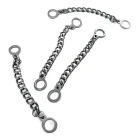

.png-140x140.webp "Hook and Eye Closures Sew-On")
.jpg-230x230.webp "Plastic Bandolier Buckle 2 cm Snap-On Plastic Buckle H009074")
Plastic snap buckles and plastic bandoliers are used in many products in daily life. It is mostly used functionally in bags, shoes, promotional products, printing, textile products, coats, coats, jackets, school or business bags, work clothes, aprons, belts, home jug products, tarpaulins and many ot..
0.14 USD
Ex Tax:0.13 USD
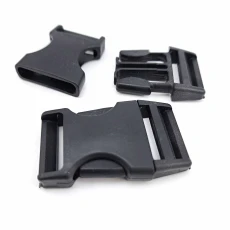
Plastic snap buckles and plastic bandoliers are used in many products in daily life. It is mostly used functionally in bags, shoes, promotional products, printing, textile products, coats, coats, jackets, school or business bags, work clothes, aprons, belts, home jug products, tarpaulins and many ot..
0.14 USD
Ex Tax:0.13 USD
.jpeg-230x230.webp "2 cm 0.79\" Wide Metal Strap Adjustment Buckle, Single Slide, Thick Model, Special Plating SB 13137")
2 cm 0.79" cm Single-Slide Strap Buckle – Iron Material with Special Finish
Product Overview
This 2 cm 0.79" cm single-slide strap buckle is crafted from strong iron material, offering reliable support in strap adjustment systems. Its special protective coating not only prevents rust but also ..
0.14 USD
Ex Tax:0.13 USD
.jpeg-230x230.webp "4 cm 1.6")
The 4 cm rectangular frame buckle is a high-quality accessory that combines durability and aesthetic appeal for textile and accessory production. Its wider inner size makes it ideal for thicker straps and heavy-duty applications, while its strong metal construction and special coating ensure long-la..
0.16 USD
Ex Tax:0.13 USD
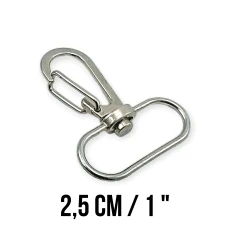
These metal almond snap hooks can be used for bags, purses, packages, leather, crafts, ribbons, belts, hanging towels for the kitchen and bathroom, and other uses. These are solid professional grade quality and very easy to install.
We use a special coating process to make shiny, smooth finished ..
0.15 USD
Ex Tax:0.13 USD
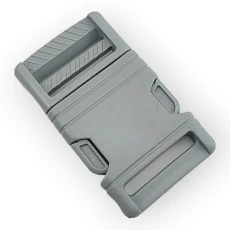
Plastic snap buckles and plastic bandoliers are used in many products in daily life. It is mostly used functionally in bags, shoes, promotional products, printing, textile products, coats, coats, jackets, school or business bags, work clothes, aprons, belts, home jug products, tarpaulins and many ot..
0.15 USD
Ex Tax:0.13 USD
.jpeg-230x230.webp "Metal Strap Adjustment Buckle 2 cm 0.8\" Single Slider Thick Model - Special Plating S 1259")
2 cm Thick Metal Strap Adjuster Buckle Single Slider – Special Coating
The 2 cm thick metal strap adjuster buckle is a durable accessory designed to easily adjust the length of straps in bags, belts, and various textile products. Thanks to its single slider mechanism, strap length can be quickly ..
0.15 USD
Ex Tax:0.13 USD
.jpeg-230x230.webp "1.3 cm 0.51\" Keychain Hook - Small Size Sailor Hook - Spring Swivel Hook SB 1762")
1.3 cm Keychain Hook – Spring Loaded Swivel Hook with Special Hanging Coating
The 1.3 cm spring-loaded swivel keychain hook is designed to provide practicality, durability, and style in everyday use. Thanks to its special hanging coating, the hook offers increased resistance to external factors w..
0.15 USD
Ex Tax:0.14 USD
.jpeg-230x230.webp "4 cm 1,6\" Metal Strap Adjustment Buckle Single Slider Special Plating SB 1279")
Sliding Strap Adjuster Buckle – 4 cm
This 4 cm metal sliding strap adjuster is designed to effortlessly adjust the length of straps on bags, backpacks, luggage, and textile products. Its durable metal construction ensures long-lasting performance even under heavy use, while the special surface coat..
0.15 USD
Ex Tax:0.14 USD
_12_11zon.jpeg-230x230.webp "20 mm / 0.79 in Serrated Barber Cape Hook, Zamak Metal E2303")
This 20 mm / 0.79 in serrated barber cape hook buckle is designed for textile products that need a compact but practical strap closure. It can be used on barber capes, salon aprons, hairdressing textiles, swimwear, lingerie, corsetry, dresses, costume work, and other products using a compatible 20 m..
0.16 USD
Ex Tax:0.15 USD
.jpeg-230x230.webp "1 cm 0,40\" Locking Hook - Parrot Hook - Spring Swivel Hook - Keyring Hook SB 14296")
The 1 cm Spring Snap Hook (Parrot Hook – Swivel Clasp) is a compact yet highly functional fastening component widely used in accessories, textile products, and handmade designs. With its 1 cm size, it is ideal for thin straps, cords, and chains, making it perfect for lightweight and elegant applicat..
0.18 USD
Ex Tax:0.15 USD
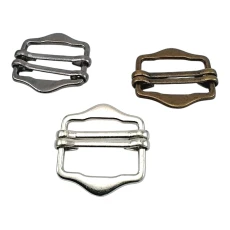
Product Description:
The double zipper adjustment hook is a durable and long-lasting product that offers excellent functionality in clothing, textiles, and bag industries. Its metal construction ensures reliable and strong use. The double zipper design provides flexibility and convenience, making a..
0.17 USD
Ex Tax:0.15 USD
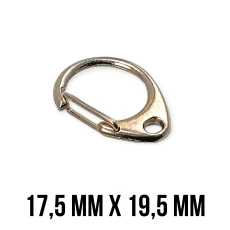
These metal almond snap hooks can be used for bags, purses, packages, leather, crafts, ribbons, belts, hanging towels for the kitchen and bathroom, and other uses. These are solid professional grade quality and very easy to install.
We use a special coating process to make shiny, smooth finished ..
0.17 USD
Ex Tax:0.15 USD
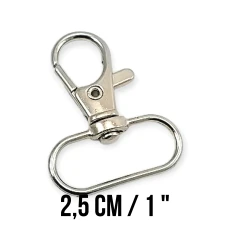
These Paris Swivel Snap Hooks can be used for bags, purses, packages, leather, crafts, ribbons, belts, hanging towels for the kitchen and bathroom, and other uses. These are solid professional grade quality and very easy to install.
We use a special coating process to make shiny, smooth finished ..
0.17 USD
Ex Tax:0.15 USD
.jpeg-230x230.webp "14 mm Lock Hook - Parrot Hook - Spring Swivel Hook A 546")
These metal almond snap hooks can be used for bags, purses, packages, leather, crafts, ribbons, belts, hanging towels for the kitchen and bathroom, and other uses. These are solid professional grade quality and very easy to install.
We use a special coating process to make shiny, smooth finished ..
0.17 USD
Ex Tax:0.16 USD
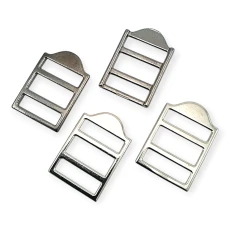
Product Description: The ladder hook vest adjustment hook is an excellent assistant, especially in areas where work safety and practicality are essential. It ensures that your vest and clothes fit perfectly, allowing you to wear them comfortably throughout the day. With its durable structure and pra..
0.18 USD
Ex Tax:0.16 USD