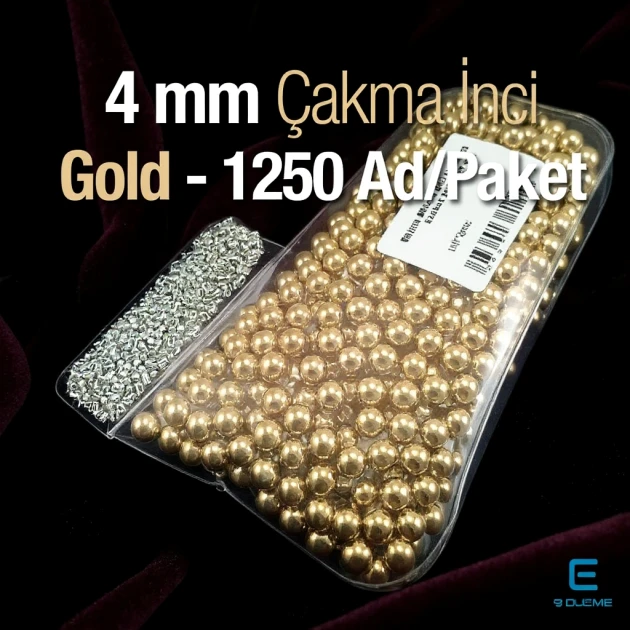
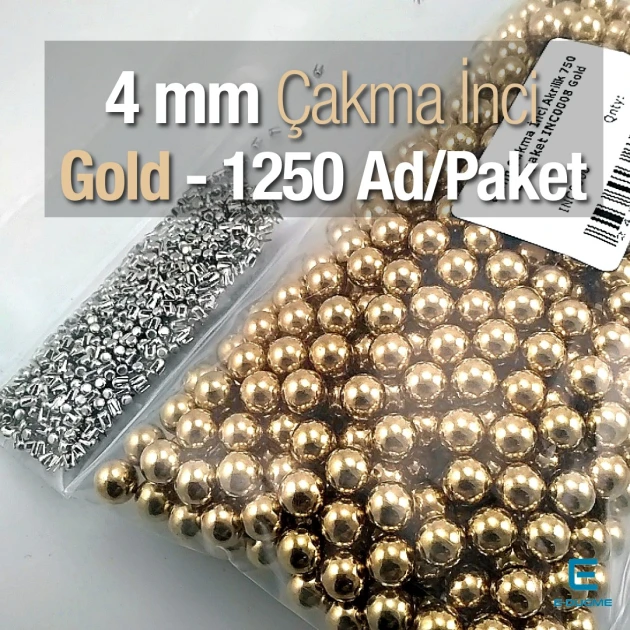
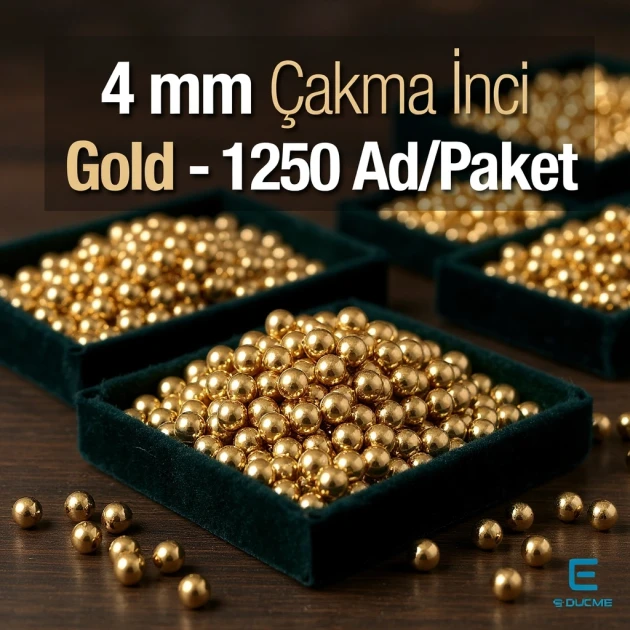
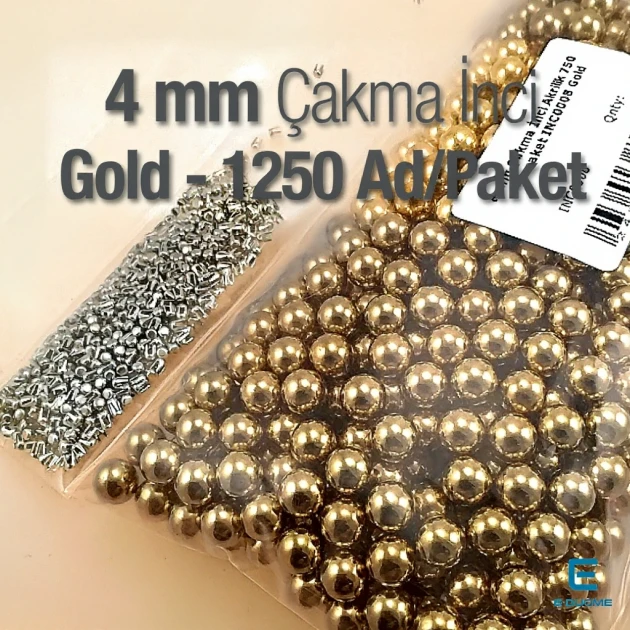
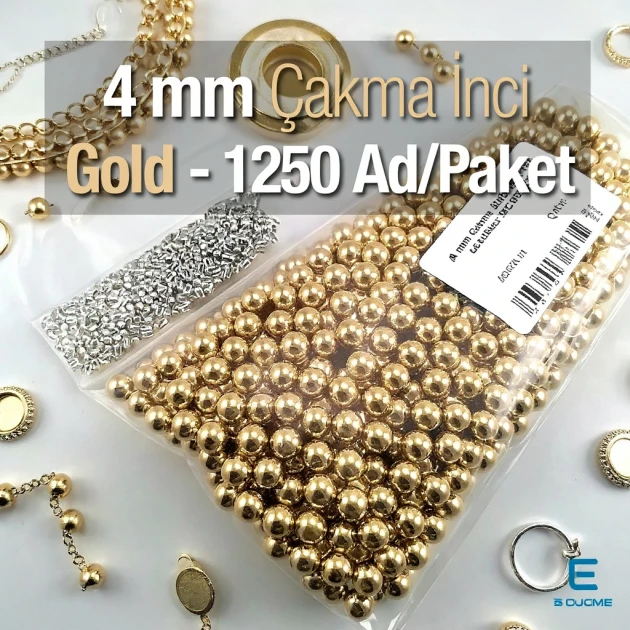
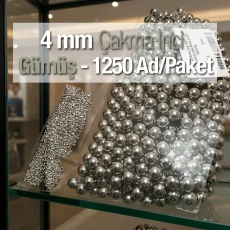
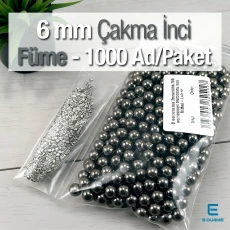
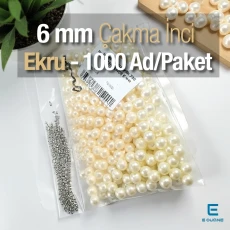
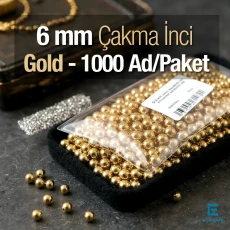
4 mm / 0.16 in Gold Acrylic Rivet Pearl 1250 pcs/Pack INC0004GLD is presented with a detailed product, setting, selection and production guide.
Product Definition
INC0004GLD is a 4 mm / 0.16 in acrylic decorative rivet pearl with a Gold finish and stainless mounting nail. The visible body is acrylic and the rear mounting component is stainless. It is not a natural pearl. The product can be used on garments, eveningwear, bridalwear, knitwear, shirts, denim, bags, footwear and accessory projects when a physically compatible die and suitable press or hand setter are used. The 4 mm size creates a small, controlled and detailed pearl effect, while the Gold surface gives a warm, bright and luxurious visual character.
How the 4 mm Size Affects Design
A 4 mm diameter supports fine borders, monograms, floral motifs, neckline details, cuff decoration and dense dotted patterns. More points can fit into the same area than with 6 or 8 mm pearls, but spacing that is too tight can reduce fabric flexibility. Digital artwork should represent the real 4 mm diameter rather than symbolic dots. Center spacing should be confirmed on the actual textile before production.
Visual Character of the Gold Finish
The Gold finish can create strong contrast on black and navy, a softer luxury effect on cream and beige, and a decorative accent on burgundy or emerald. Actual appearance changes with lighting, textile texture, screen calibration and photography. When matching other gold hardware such as zippers, buckles, chains or snaps, compare the real parts physically because commercial color names do not guarantee an exact match.
Acrylic Body and Stainless Nail
The acrylic pearl body keeps the individual component relatively lightweight, although total load depends on the number of pearls used. The stainless nail is the mounting component. “Stainless” does not mean the whole product is metal. Excessive pressure can mark or crack the acrylic body, while insufficient pressure can leave a loose attachment. Establish press force using the actual die, textile and layer structure.
Pack Contents and Production Planning
INC0004GLD is supplied in packs of 1250 sets. Purchasing calculations should include samples, machine setup, rejected settings, dropped parts and service spares, not only the theoretical finished-goods count. At 10 pearls per item one pack theoretically covers about 125 items; at 20 pearls it covers about 62 before waste. For important shade continuity, buying enough material from one lot is helpful.
Selecting the Correct Die
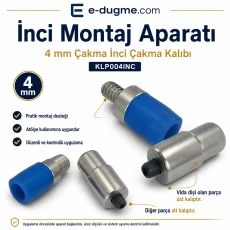
Nominal 4 mm size alone does not guarantee die compatibility. The cavity should support the pearl correctly, guide the nail on center and fit the chosen machine. A wrong cavity can scratch the surface, tilt the pearl or create cracking. Make several test settings on the real textile before bulk production and inspect both sides. Keep die faces clean.
Using a Press or Hand Setter
The product can be used with a compatible press or hand-setting tool. A manual bench press can be practical for samples and small-to-medium production, while mechanical or pneumatic systems can reduce variation at higher volumes. Machine name is less important than centered tooling and controlled pressure. Start conservatively and recheck the setup whenever fabric type, layer count or construction changes.
Step-by-Step Setting
Mark pearl centers at true scale. Place the fabric flat without unwanted tension. Position the visible pearl on the face side and the stainless nail on the reverse on the same center line. Apply controlled pressure, then inspect the first sample for scratches, cracks, tilt, nail closure and sharp projections. In multi-point motifs, setting major references first can reduce cumulative alignment drift.
Fabric Compatibility
Denim, gabardine, felt and stable woven fabrics often provide predictable support. Chiffon, tulle, fine satin, loose knits and highly elastic textiles need more careful testing. Thin fabrics may pull around the nail opening, while very thick constructions may limit nail reach. Test every new textile using offcuts from the real production material and review flex, stretch and care behavior where relevant.
Use on Delicate Fabrics
Fine fabrics can benefit from the small 4 mm scale, but dense patterns may still create local stiffness. Begin with a low-density sample and check for pulled yarns, puckering, waviness and reverse-side discomfort. A support layer may help in some constructions, but it changes total thickness and therefore requires a new setting test. Plan installation sequence before linings or second layers are permanently closed.
Denim and Thicker Surfaces
On denim, quilted panels, synthetic-leather-backed materials and multilayer seams, total thickness becomes critical. A setting approved on one layer may not work across a pocket corner or folded seam. Do not force the nail at an angle. Gold can create a warm, high-contrast accent on denim. High-abrasion zones such as seats, bag bases or footwear flex lines require additional wear testing.
Bridal and Eveningwear
A 4 mm Gold rivet pearl can create a brighter and more luxurious alternative to a classic pearl look in bridal and eveningwear. It can be used on bodices, shoulders, cuffs, necklines, lace motifs and fine borders. Dense coverage should be evaluated for drape, flexibility and total accessory load. Review samples under lighting similar to the final event environment where possible.
Casualwear and Knitwear
The product is also suitable for everyday fashion. Shirt collars, cuffs, knitwear shoulders, sweatshirt panels, jacket pockets and decorative strips can use the 4 mm pearl for a controlled bright detail. Knit structures require additional testing for loop damage and stretch loss. On garments close to the skin, reverse-side comfort should be checked. Positioning templates improve repeatability.
Bag and Footwear Applications
Bags and footwear can contain felt, foam, interfacing, synthetic leather and quilted layers. Measure total thickness and reproduce the real construction during sampling. The nail should not leave a sharp reverse projection. Decorative panels are generally better than highly abraded handle, base or flex zones. This is a mechanically set component, not an adhesive flatback pearl.
Pattern Planning and Spacing
Layout quality is essential. Represent each pearl at the real 4 mm diameter in digital artwork. Use fixed guides for straight borders and full-size templates for curves. Mirrored garment parts should use the same reference points. If centers overlap in tight corners, enlarge the motif or remove selected points rather than forcing pearls too close. Dense motifs can reduce flexibility in movement zones.
Color Coordination
Gold hardware from different suppliers can vary in tone and gloss. Compare the pearl with zipper teeth, sliders, snaps, eyelets, buckles, chains or logos on the actual textile. Matte fabric can make the pearl appear brighter, while satin can reduce contrast. For large runs, sourcing from one lot supports visual consistency.
Repeated-Production Workflow
Efficient production requires organized component feeding, clean dies, approved samples, templates and in-process inspections. Operators can work from smaller labelled trays containing the quantity needed for the current lot. Record press settings and layer count after first-article approval. Pull samples during production to check centering, surface marks, nail closure and pattern alignment.
Post-Setting Quality Control
Quality control should inspect both sides. Confirm centering, absence of cracks and compression marks, pattern alignment and correct finish. On the reverse, check secure nail closure and absence of hazardous projections. If a pearl is loose, review die alignment, nail orientation and fabric thickness before increasing pressure. Gold surface scratches may be more visible under angled light.
Wash and Care Testing
A strong-looking setting at the press does not guarantee long-term performance. If the finished article will be washed, dry-cleaned, ironed, flexed or heavily abraded, validate the complete sample under those conditions. Do not place a hot iron directly on the acrylic pearl. Care instructions should consider all components in the assembled product.
Comparing 4 mm, 6 mm and 8 mm
A 4 mm pearl is small and detailed, 6 mm is medium-scale and clearly visible, and 8 mm creates a stronger raised statement. Smaller pearls can build smoother contours with more points. Larger pearls use fewer pieces but attract more attention. Compare all sizes on the actual fabric if the design team is uncertain.
Safety for Baby and Children's Products
Small decorative parts on baby and children's products require separate safety evaluation. Consider detachment risk, age group, intended use and applicable market requirements. Where relevant, perform suitable retention or pull testing on the finished article. Product description does not replace regulatory testing or certification.
Sample Approval
Catalog data cannot fully represent every combination of fabric, interfacing, layer count, die, press and operator technique. A physical sample should be made using the real production construction. Review color under more than one light, flex the area and perform care testing where relevant. Keep the approved sample as a production reference.
Common Setting Mistakes
Common problems include using a die with the wrong cavity, applying high pressure before testing, inserting the nail off-center, laying out long rows without measured references and mixing sizes or finishes in unlabelled trays. Dirty die faces can also mark many parts in sequence. Sampling, clear work instructions and organized workstations prevent most of these issues.
Troubleshooting
If a pearl is loose, first check nail type, total thickness and die centering. If it sits at an angle, inspect upper and lower die alignment and nail entry angle. Circular surface marks can indicate an incorrect cavity or excessive pressure. Puckering may point to fabric structure or excessive pattern density. Change one variable at a time while troubleshooting.
Storage and Stock Control
Store acrylic pearl bodies and stainless nails in clean, dry, labelled containers. Do not mix 4, 6 and 8 mm components. Keep model, finish and size information with any parts removed from the original pack. Avoid heavy loads on pearl containers. Keeping a small labelled service reserve can support future repairs or repeat styles.
Calculating Pack Consumption
Use the approved final pattern for consumption calculations. Twelve pearls per item across 100 units means 1200 pieces before samples and waste. Twenty-five pearls across 100 units means 2500 pieces. Compare the result with the 1250-piece pack size and round purchasing upward. Add a realistic allowance for setup and service stock.
Wholesale and Professional Use
Purchasing documentation should identify INC0004GLD, 4 mm / 0.16 in, Gold, acrylic body, stainless nail and 1250 pcs/Pack instead of simply saying “gold pearl.” Model-code discipline reduces repeat-order errors. Actual recorded waste rates can improve future purchasing calculations. Large programs should consider lot continuity and service stock.
Die and Press Checklist
Before production, verify die fit, upper/lower orientation, press centering, bed height, nail direction, layer count and pressure against the approved sample. Inspect both sides of the first set piece before starting the full run. Clean the die cavity. Compare the first piece after an operator or shift change with the reference sample.
Ergonomics and Placement
Placement should consider comfort and function as well as appearance. Underarms, seats, belt contact zones, bag handle grips, footwear flex lines and high-abrasion areas carry more mechanical load. Dense use of small pearls can stiffen a textile surface. Fit-test garments with the real layout and plan reverse-side closure before linings are completed.
Dense-Motif Strategy
The 4 mm size works well for stars, flowers, monograms, waves, outlines and geometric grids. Consistent center spacing is essential. Divide large panels into controlled sections starting from central references to reduce accumulated alignment error. Dense motifs in movement zones may need to be opened up. High contrast with Gold can make small alignment differences more visible.
Cost and Production Time
Mechanical setting can reduce repetitive sewing time, but complete costing should also include die setup, template preparation, sampling, operator time, in-process inspection and possible rework. The 1250-piece pack provides a useful material unit. Saved templates and recorded press settings can shorten repeat-job setup time.
Waste Reduction
Incorrect dies, excessive pressure, poor marking and mixed finishes create avoidable waste. Use trays with raised edges, keep only the current model at the station and record reasons for rejected settings. Removing a wrongly set pearl can damage the textile, so prevention is normally more economical than repair. Waste records improve future safety allowances.
Pre-Purchase Check
Before ordering, confirm the 4 mm / 0.16 in diameter, Gold finish and 1250-piece pack suit the project. Ensure the workshop has a physically compatible die and press or hand setter. Review fabric thickness, stretch and reverse-side access. Allow time for sampling. For critical matching, compare the real pearl with fabric and other hardware.
Product Photography and Color Evaluation
Photography helps selection, but do not judge size or finish only from image scale. Review the real 4 mm diameter with a ruler or physical sample. Gold can appear lighter or darker on different displays. Camera white balance and surrounding reflections can shift glossy surfaces. The stated dimension should remain the main reference.
Operator Training
To reproduce results across shifts, define component orientation, die cleaning, setting sequence, inspection points and reject criteria. Keep an approved INC0004GLD sample at the workstation. New operators should prepare a short trial series before full production. This reduces learning-related waste on saleable goods.
Repair and Service Stock
Retaining a small labelled INC0004GLD service stock after production can support later repairs or matching. The exact size and tone may not be available months later. Store the reserve with model code, date and, where possible, lot information. Do not mix similar-looking 4, 6 and 8 mm parts. Removal from old fabric can itself cause damage, so repair methods should be tested.
Accurate Bill-of-Materials Description
A bill of materials should identify INC0004GLD, 4 mm / 0.16 in, Gold, acrylic body, stainless nail and 1250 pcs/Pack. This keeps purchasing, quality and production teams aligned. Adding the approved setting-die reference can shorten setup time on repeat production.
Additional Professional Production Control
Consistent output depends on process discipline as well as the correct component. Fabric lot, layer count, interfacing, seam position and press setup can change setting behavior. For INC0004GLD, use the approved sample, template, die and pressure as one reference system. In-process checks should review surface marks, nail closure, pattern alignment and looseness. Separating rejected parts and recording the reason for rejection helps reduce waste and improve future setup.
Product Specifications Summary
- Model: INC0004GLD
- Diameter: 4 mm / approximately 0.16 in
- Finish: Gold
- Body: Acrylic
- Mounting nail: Stainless
- Pack: 1250 pcs
- Setting: Compatible die and press/hand setter
- Applications: Garments, eveningwear, bridalwear, knitwear, denim, bags, footwear and accessories
- Sample testing is recommended before bulk production
- Care conditions should be validated on the finished item
Frequently Asked Questions
What is it made from?
The visible pearl body is acrylic. The mounting nail is stainless. It is not a natural pearl.
How many pieces are in one pack?
INC0004GLD is supplied in a 1250-piece pack with pearl bodies and matching stainless mounting nails intended as sets.
Which die is required?
Use a die that physically matches the 4 mm pearl body and this nail geometry. Sample testing before bulk production is recommended.
Which fabrics can be used?
It can be evaluated on denim, stable woven fabrics, gabardine, felt, selected knits and other suitable surfaces. Test each new textile.
How does the Gold finish look?
It creates a warm, bright and luxurious metallic effect. Actual appearance varies with fabric, lighting and display conditions.
Can the finished item be washed?
Performance depends on textile, setting quality and care method. Validate the finished sample under intended care conditions.