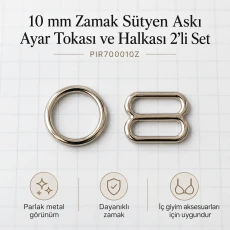
Bra clasp types, hooks and strap hardware: What closes a bra is not always the same part that adjusts its straps. A back hook-and-eye tape, a front clasp, a detachable strap hook, a connecting ring and a strap slider are distinct components. Buyers searching for “bra clasp”, “bra buckle” or “bra hooks” often encounter all of them together. This E-Buttons guide helps apparel teams identify the actual function, compare sizes and approve the complete fastening assembly before sourcing hardware for lingerie, swimwear or bralettes.
Bra clasp types and what each component actually does
| Component | Function | Buyer's check |
|---|---|---|
| Back hook-and-eye | Closes the body band | Band width and closure construction |
| Front clasp | Connects selected front-opening designs | Interlocking shape and fabric load |
| Strap slider | Adjusts shoulder-strap length | Internal opening and tape movement |
| Bra ring | Connects strap sections | Ring opening and stitching |
| Strap hook | Attaches a detachable strap | Matching receiver and hook profile |
The bra strap slider: length adjustment, not a back closure
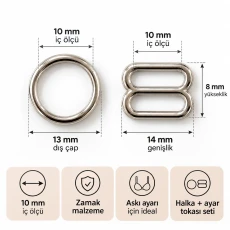
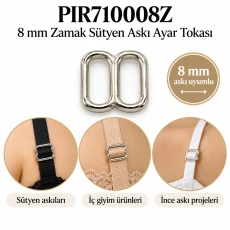
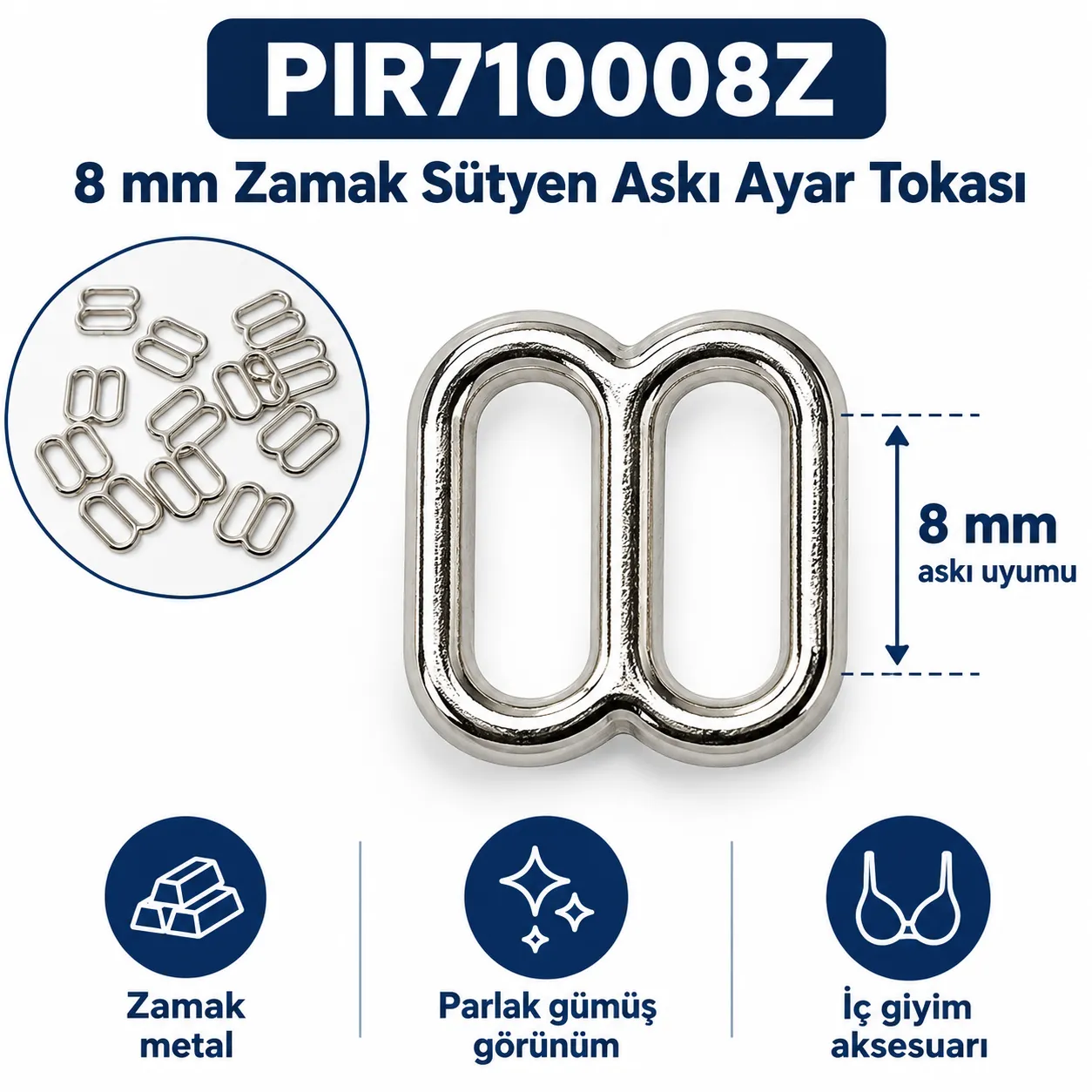
A slider guides the elastic through a controlled path. Its nominal width should be considered alongside elastic thickness and the seam that secures the loop. A 10 mm / 0.39 in zamak strap slider is an individual adjustment component, not a complete clasp. For sample approval, move the elastic to both ends of its intended adjustment range; note any folding, slipping or excessive resistance.
Bra rings: connecting a strap to the garment
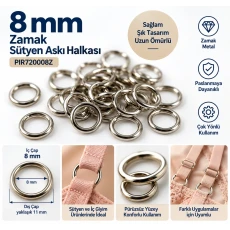
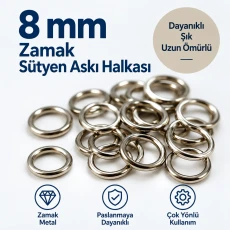
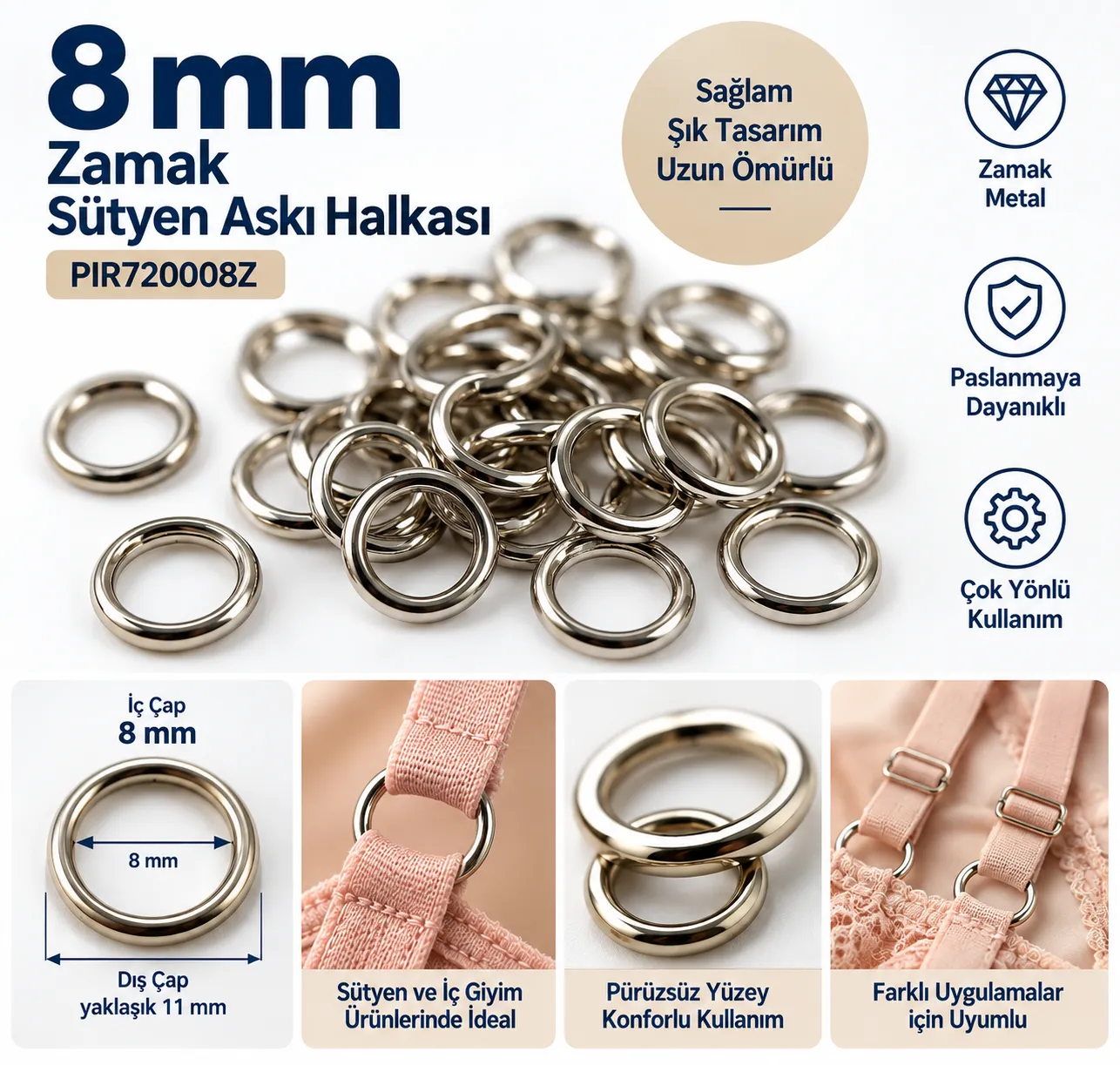
A small ring joins elastic tape to the front or back section of a strap or garment. The ring does not shorten or extend the strap by itself. Its inner opening must leave enough room for the finished tape and seam construction. Confirm how the strap lies when the garment is worn: a ring that turns at the wrong angle can twist the elastic even when its nominal size matches.
Hooks and true closures should not be confused
A detachable strap hook engages a specific opposing part. The multi-position hooks at the rear band and a front-opening clasp have different mechanics and sizing. When sourcing parts for a convertible bra, distinguish a strap hook from a back fastening in the bill of materials. Similar color or a shared “10 mm” label is not proof that two components are compatible.
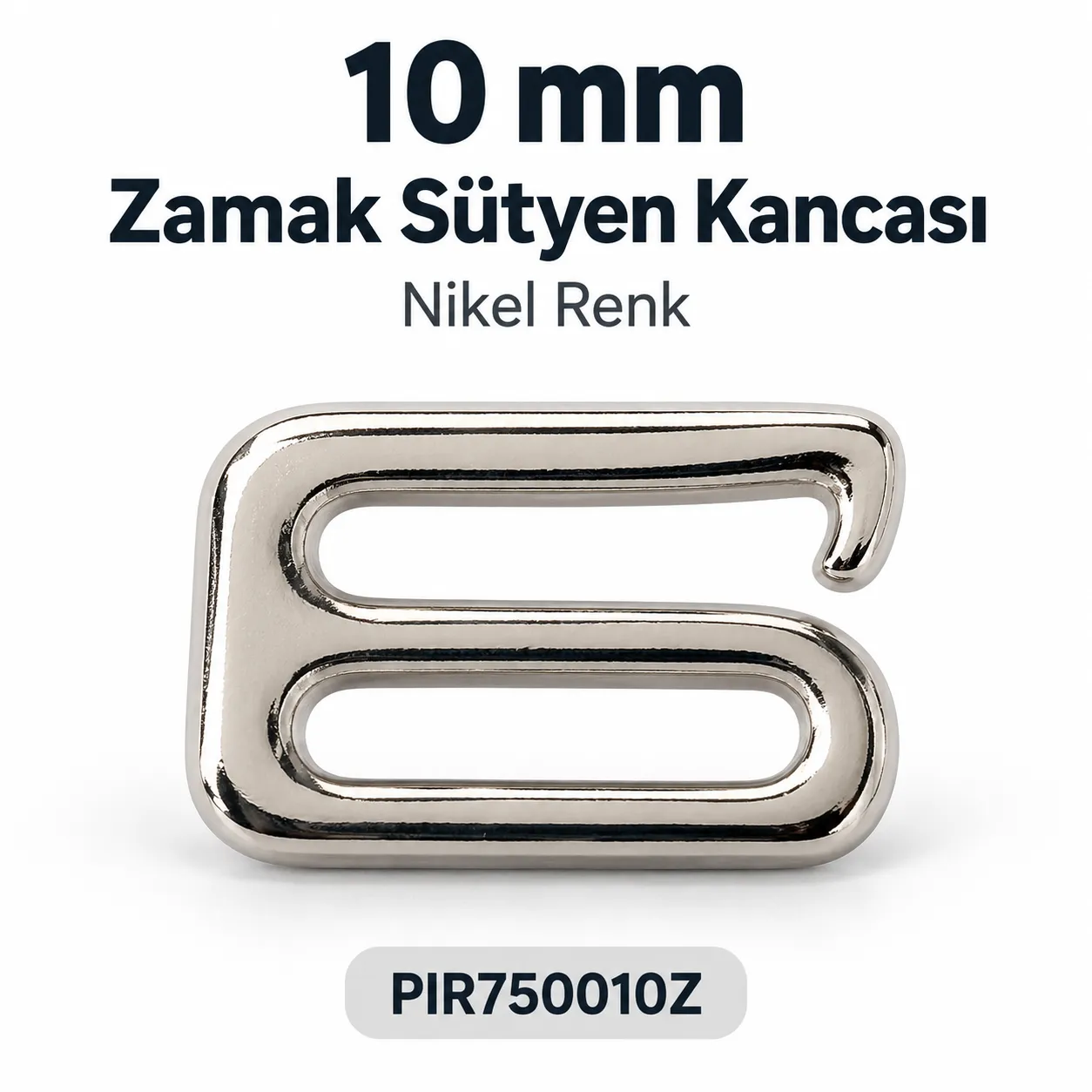
Bra hardware sizes: metric and inch equivalents
Reference classes include 6 mm (0.24 in), 8 mm (0.31 in), 10 mm (0.39 in), 12 mm (0.47 in), 15 mm (0.59 in) and 20 mm (0.79 in). Measure the elastic after folding and stitching, not merely the roll label. The external frame width can differ from the usable opening. A slider that is too loose may allow movement outside the intended adjustment range; one that is too narrow may fold the strap.
Separate components or two-/three-piece hardware sets?
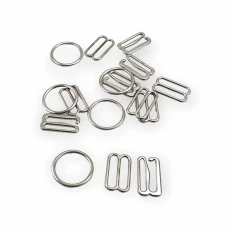
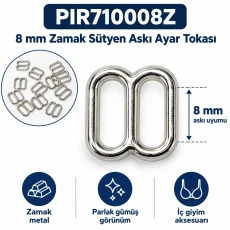
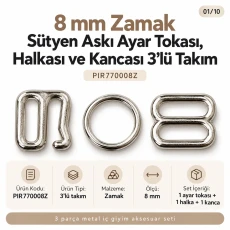
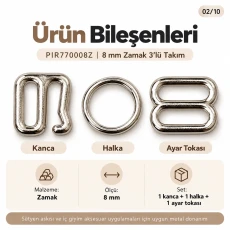
If the design needs only strap adjustment, one slider may be sufficient. A two-piece strap system generally adds a ring. Three-piece sets can introduce a hook for detachable fastening, but confirm the actual package contents. Review the 8 mm / 0.31 in bra strap hardware product as a real example. Always check whether quantities refer to pieces, sets or pairs rather than assuming interchangeable packing units.
Material, finish and testing questions
Listings may identify zamak, plated metal or coated constructions. Finish names alone do not prove a product is nickel-free, hypoallergenic, saltwater-proof or suitable for a specific wash cycle. For garments with specific skin-contact or care requirements, request relevant supplier documentation. Approve the actual elastic, metal hardware, stitching and garment as a system, not as isolated components.
Six checks for production-ready strap assemblies
- Describe whether the fastening is a back closure, front clasp or strap connection.
- Record the finished elastic width, fold allowance and material thickness.
- Confirm the slider path and usable ring opening with the actual tape.
- Verify the hook against its intended receiving part.
- Test sliding and opening/closing on a fully stitched sample.
- Record approved hardware codes, finish, component count and repeat-order sample.
Frequently asked questions
What is the clasp of a bra called?
The back-band fastening is commonly called a hook-and-eye closure. A slider, ring or hook on the shoulder strap is a separate component.
What are the main bra clasp types?
Back hook-and-eye closures, selected front-closure mechanisms and detachable-strap hooks are distinct types. Their fastening geometry determines use.
Are bra buckles and bra sliders the same?
The terms may overlap in catalogs, but the slider specifically changes strap length; a clasp is intended to open and close a connection.
How should I choose between 8 mm and 10 mm hardware?
Measure the finished strap elastic, then verify the actual usable opening, fabric thickness and mating components on a sample.
What does a three-piece bra hardware kit contain?
Often a slider, ring and hook, but the seller's current packing list and unit count must be checked before ordering.
What should manufacturers document for repeat orders?
Exact item and mating-part codes, approved size, finish, elastic specification, physical sample and package count.